
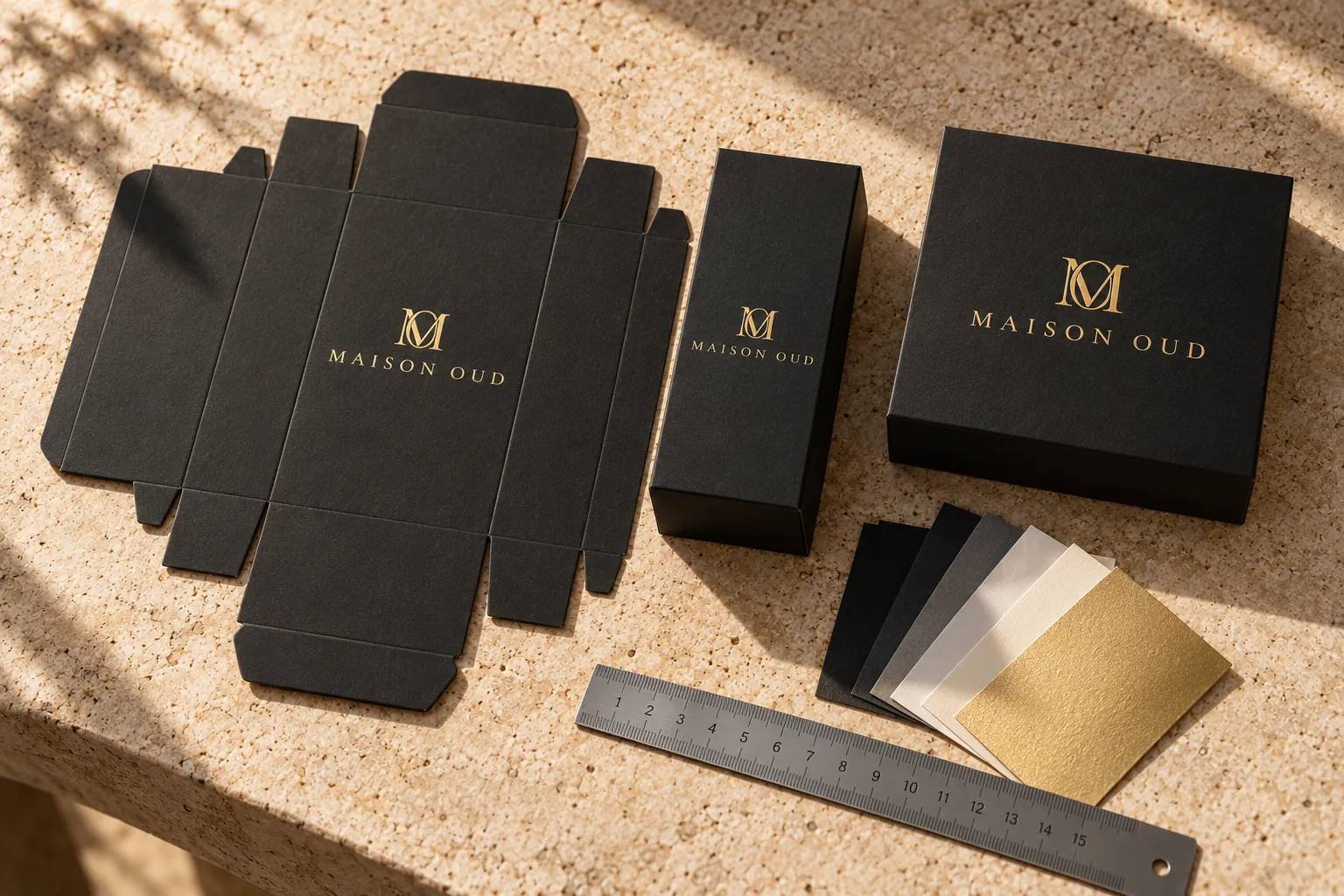
The short answer
Custom packaging cost in the UAE comes from two parts: a fixed setup cost (plates, cutting dies, press makeready) and a running cost per unit (board, print, finishing, conversion). Divide the setup by your quantity, add the running cost, and you have the unit price. That is why larger runs cost far less per piece.
Every week someone asks us how much a box costs, and the honest reply is another question: which box, in what board, printed how, and how many? This guide explains what sits behind a packaging quote, so you can read one properly, compare two suppliers fairly and make design decisions that keep the price where you need it. We do not publish fixed prices here, because a price without a spec is meaningless. We do show how each choice moves the cost relative to the others.
The formula behind every packaging quote
Whether you are ordering kraft bags for a café or rigid boxes for a perfume launch, the quote is built the same way. First come the fixed costs: artwork preparation, printing plates for each color, a cutting die shaped to your dieline, any foil or embossing blocks, and the time and material spent setting up each machine before good pieces come off it. These costs are roughly the same whether you order 2,000 pieces or 20,000.
Then come the variable costs, which scale with quantity: board or paper, ink, coatings and laminates, machine time per sheet, conversion (folding, gluing, handle fixing, hand assembly for rigid boxes), counting, packing into cartons and delivery.
Unit price equals fixed costs divided by quantity, plus variable cost per piece. Almost every way to reduce packaging cost works on one side of that formula or the other.
Fixed and variable costs at a glance
| Cost component | Fixed or variable | What drives it | Reusable on reorder? |
|---|---|---|---|
| Artwork preparation and proofing | Fixed | Complexity, number of designs, revisions | Yes, if artwork is unchanged |
| Printing plates | Fixed | Number of colors, one plate per color per design | Sometimes; plates can be stored, but often remade |
| Cutting die | Fixed | Size and complexity of the dieline, windows, handles | Yes, a die lasts many runs |
| Foil and emboss blocks | Fixed | Area and detail of foil or emboss | Yes |
| Makeready (setup sheets and time) | Fixed per run | Number of colors, finishes and machines | No, every run needs setup |
| Board or paper | Variable | Grade, weight, size of the flat sheet | n/a |
| Ink and coatings | Variable | Coverage, number of colors, varnish or laminate | n/a |
| Finishing | Variable | Lamination, spot UV, foil, emboss, window patching | n/a |
| Conversion | Variable | Folding, gluing, handles, hand assembly | n/a |
| Packing and delivery | Variable | Carton count, pallets, drop points | n/a |
Material: the biggest running cost
On most packaging, the board or paper is the largest share of the running cost. Three things decide material cost: the grade, the weight and how efficiently the flat shape fits on a press sheet.
Grade means the type of board. Brown kraft paper is generally the most economical for bags. White kraft and coated papers cost more. For cartons, folding boxboard (FBB) is the common choice, while solid bleached board (SBS) costs more and gives a brighter, smoother surface for premium print. Corrugated board adds strength for pizza boxes and shipping cartons. Rigid boxes use thick grayboard, often 1.5 to 2.5 mm, wrapped in printed paper, which costs far more per box in material and in labor.
Weight is measured in gsm. Heavier paper and board feel more substantial and cost more. The right weight is the lightest one that passes your real-world test: a bag that carries your heaviest order, a carton that survives stacking in a warehouse.
Sheet fit is the part most buyers never see. Packaging is printed on large sheets and then die-cut. If your box is a few millimeters too big to fit four on a sheet, you may only fit three, and material cost per box jumps by a third. A good printer will tell you when a small size change would improve the layout.
Relative cost by packaging type
A typical industry index for a similar-sized printed item, with a one-color kraft paper bag at 100. Use it to compare formats, not as a price list.
| Format | Typical relative cost | Why |
|---|---|---|
| Kraft paper bag, flat handle, 1 to 2 colors | 100 | Economical paper, fast machine production |
| Kraft bag, twisted handle, 1 to 2 colors | 120 to 150 | Handles cost more to make and fix |
| White paper bag, full color | 140 to 190 | Bleached paper and more ink |
| Folding carton, FBB, full color, varnished | 80 to 200 | Depends heavily on size and sheet fit |
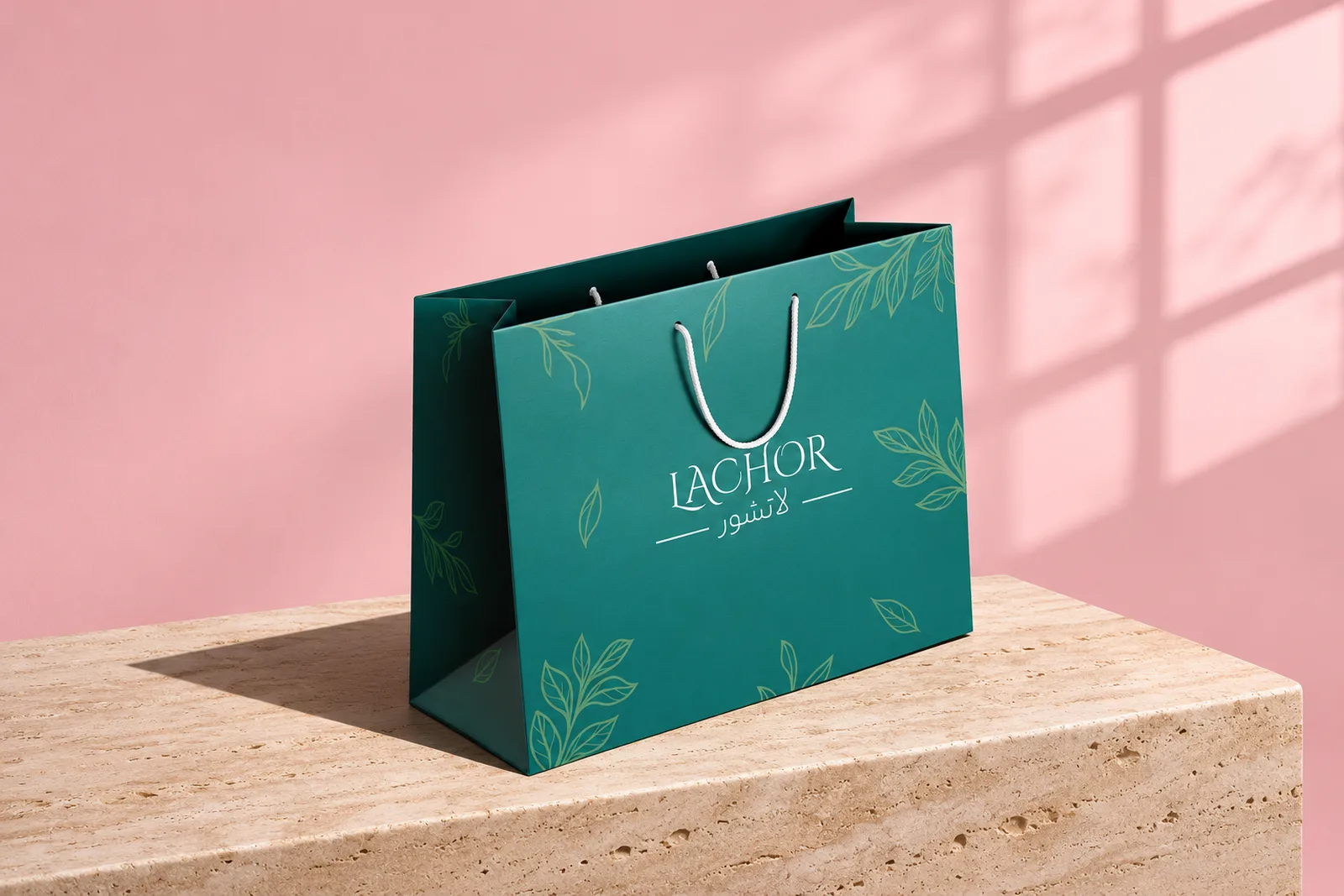
| Laminated shopping bag, rope or ribbon handles | 300 to 600 | Heavier art paper, lamination, hand-finished handles |
| Rigid lid-and-base box, wrapped | 800 to 2,000+ | Grayboard, wrapping paper and substantial hand work |
| Magnetic or drawer rigid box with insert | 1,200 to 3,000+ | More components, magnets, inserts, hand assembly |
Print: colors, coverage and method
On offset, each color needs its own plate and a unit on the press. Four-color process (CMYK) reproduces photographs and full-color designs. A spot or Pantone color adds a fifth plate but matches a brand color exactly, which matters for brands with a signature red or green. One- or two-color designs need fewer plates and less setup, so they cost less at low quantities.
Coverage matters too. A design with a full flood of dark color uses more ink and needs more drying care than a white box with a small logo. Printing the inside of a box, which many premium brands like, adds a second print pass.
For very short runs, digital printing avoids plates altogether, which makes it economical for samples and small quantities. For production runs, offset becomes cheaper per unit and gives better color control. Our post on offset versus digital printing explains where the crossover falls.
Finishes: what they add and when they are worth it
Typical effect on unit cost. Each finish also adds setup and, for foil and emboss, a block.
| Finish | Typical cost impact | Worth it when |
|---|---|---|
| Aqueous or UV varnish | Low | You want scuff protection without lamination |
| Gloss or matt lamination | Low to medium | The pack is handled a lot or needs moisture resistance |
| Soft-touch lamination | Medium | Premium retail, cosmetics, gifting |
| Spot UV | Medium | You want a logo or pattern to catch the light |
| Hot foil (gold, silver, colors) | Medium to high | A small foil area on a premium pack gives most of the effect |
| Embossing or debossing | Medium to high | Tactile branding on heavier board |
| Window patching | Medium | Customers need to see the product, as with cakes or sweets |
| Rope, ribbon or twisted handles | Medium to high | Shopping bags and gift bags |
Quantity and minimum orders
Because setup costs are fixed, the first few thousand pieces carry most of them. A simple illustration in made-up cost units: if setup costs 2,000 units and each box costs 0.50 to make, 2,000 boxes cost 1.50 each, 5,000 cost 0.90, 10,000 cost 0.70 and 25,000 cost 0.58. Doubling from 2,000 to 5,000 cuts the unit price by 40%. Doubling from 10,000 to 20,000 saves much less.
Minimum order quantities exist because below a certain run length the setup cost per piece makes the job uneconomical for both sides. Minimums vary by product: plain-printed kraft bags and folding cartons usually have lower practical minimums than cups, and rigid boxes, which involve more hand work and less machine setup, can sometimes be made in smaller batches at a higher unit price. Ask for the minimum on each item when you request a quote.
Hidden costs to ask about
These rarely appear in the headline unit price but show up on the invoice or in your storeroom.
Artwork changes after proof
A change after plates are made means new plates. Approve the proof carefully.
Physical samples and prototypes
A white sample or a printed prototype can cost extra, but it is far cheaper than a wrong production run.
Last-minute changes
Late changes to quantities, sizes or artwork can mean new plates or dies and a new production slot.
Storage
Ordering a year's stock to get a low unit price ties up cash and space. Some suppliers offer scheduled call-offs instead.
Delivery
Multiple drop points, upper-floor deliveries or out-of-emirate delivery can add cost.
VAT
5% VAT applies in the UAE. Make sure you compare quotes on the same basis.
Ten ways to lower the unit price
Order fewer designs in larger runs
One design across three sizes beats three designs in one size each.
Standardize sizes
Use the same box or bag size for several products where you can.
Design to the press sheet
Ask your printer whether a small size change improves the layout.
Use fewer colors
One or two strong colors on kraft look deliberate and cost less than full color.
Keep finishes targeted
A small foil logo gives most of the premium effect of a large foil area.
Choose the lightest board that works
Test it with real product. Over-specifying board is common.
Reuse tooling
Keep the same dieline across reorders so the cutting die is reused.
Plan reorders early
Avoid last-minute orders and air freight for imported components.
Ask about scheduled deliveries
Order a larger quantity for the unit price, take it in batches.
Lock artwork before you request final pricing
Changes later cost time and plates.
Custom packaging for small businesses
If you are a home bakery, a new café or a perfume start-up, full custom packaging may not make sense on day one. There are good intermediate steps. Plain stock boxes or bags with a well-printed sticker or sleeve look neat and cost little. A one-color logo printed on stock kraft bags often clears minimums that a full-color design would not. Standard sizes avoid a new cutting die.
When volume grows, move your best-selling item to fully printed packaging first. The best seller carries the most customers and the largest quantity, so it gets the best unit price and the most brand value from the print.
Three examples, and what drives each price
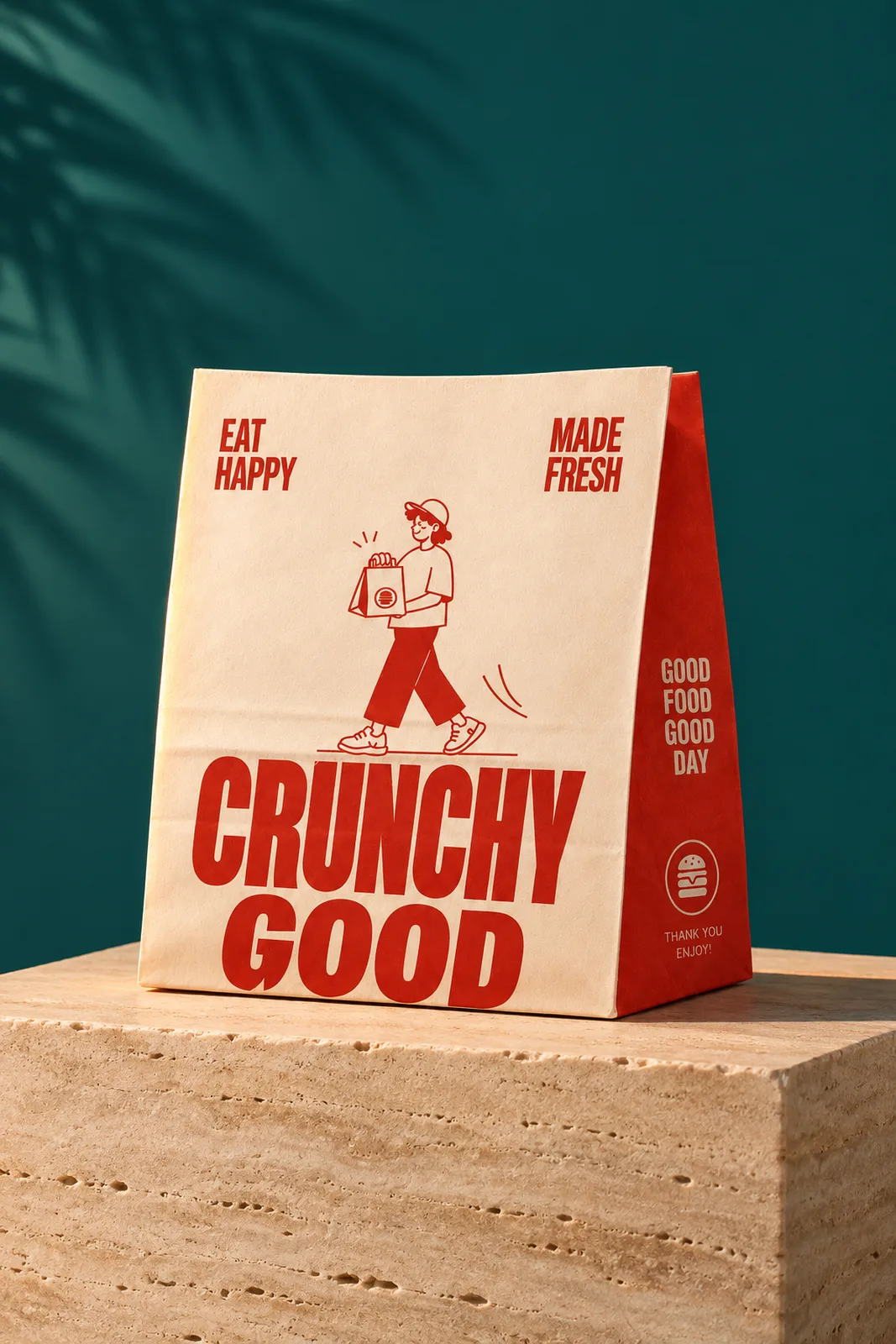
A café's takeaway bag: brown kraft, flat handles, two-color logo, one size. The price depends mostly on paper weight and quantity. Moving from 5,000 to 15,000 bags typically brings the biggest saving. Twisted handles or full-color print push it up.
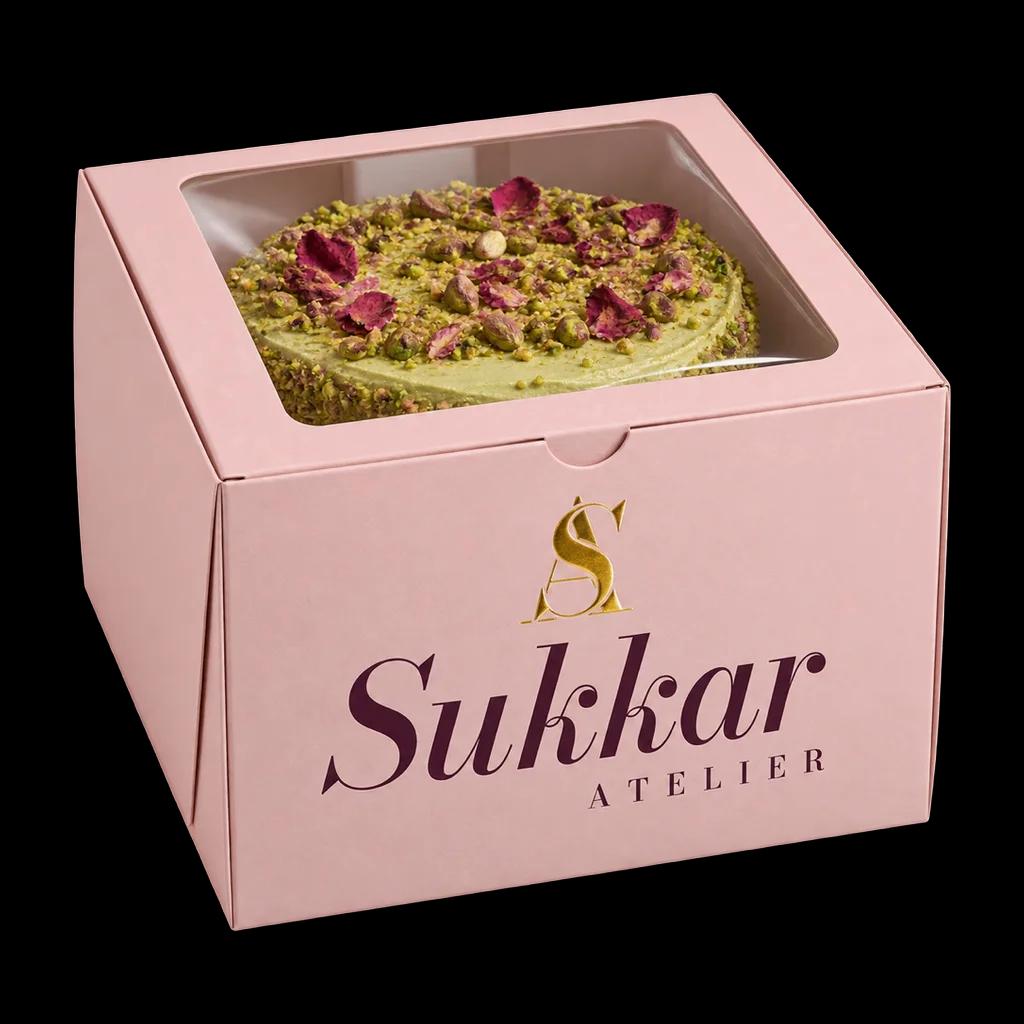
A bakery's window cake box: white board, full-color print, a die-cut window patched with film, two sizes. The cutting die and window patching are the main extras. Using the same artwork on both sizes and the same window shape keeps setup down.
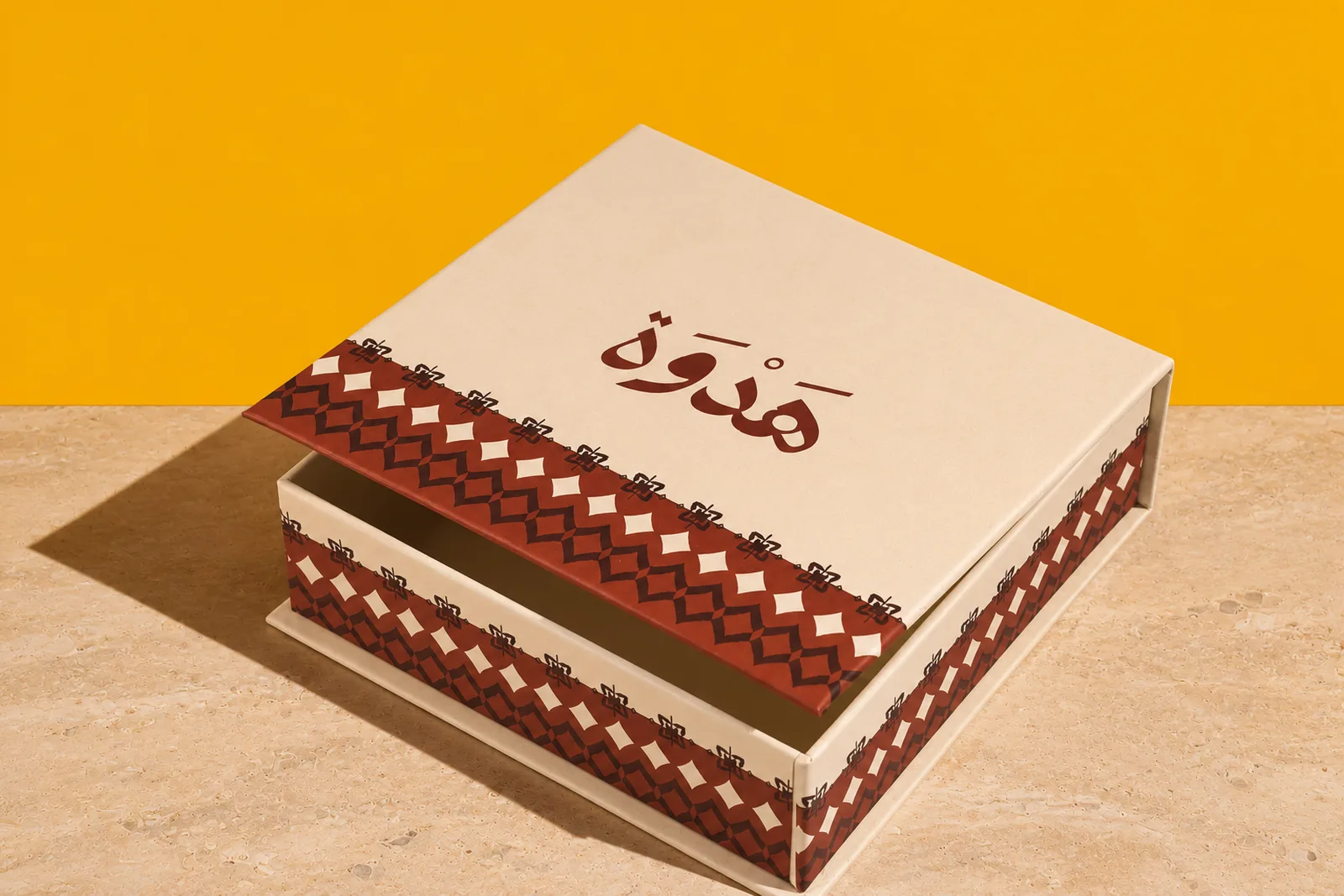
A perfume brand's rigid gift box: grayboard wrapped in printed paper, gold foil logo, magnetic closure, fitted insert. Here hand work dominates. Every rigid box is wrapped and assembled with significant manual labor, so quantity matters less than on machine-made cartons, while the number of components and finishes matters more.
What a custom packaging job looks like, step by step
Brief and quote
You share product dimensions, quantities, design direction and delivery location. We recommend materials and send a quote.
Dieline and artwork
We supply or confirm the dieline; you or your designer place the artwork on it.
Proof and sample
A digital proof for every job, and a physical sample or prototype where size or structure is new.
Production
Plates, printing, finishing, die-cutting and conversion.
Delivery
Delivered across the UAE from our Ajman factory.
What to send for an accurate quote
Product and dimensions
What goes inside, and its size and weight.
Packaging type
Bag, carton, rigid box, cup, or tell us the problem and we will suggest one.
Quantity
Per design and size, plus expected annual volume.
Artwork or design direction
Final files if you have them; a reference or brand guide if not.
Finishes
Lamination, foil, emboss, spot UV, windows, handles.
Delivery
Location and whether you want one delivery or scheduled batches.
Working with GPP
German Printing Press has printed and converted packaging in the UAE since 2009, from its factory in Ajman. We run German-built Heidelberg offset presses with in-house lamination, foil, embossing, spot UV and die-cutting. That means one supplier handles the whole job and one team answers for color and quality. Send us the details above and we will quote each item clearly, show you which choices move the price, and suggest alternatives where a small change saves money.
Products in this guide
GPP Production Team
Print & packaging specialists, Ajman
Written by the people who run our presses and finishing lines in Ajman, and checked against current UAE rules where regulation is involved. Published 29 Sept 2026; last reviewed 10 Oct 2026.