
The short answer
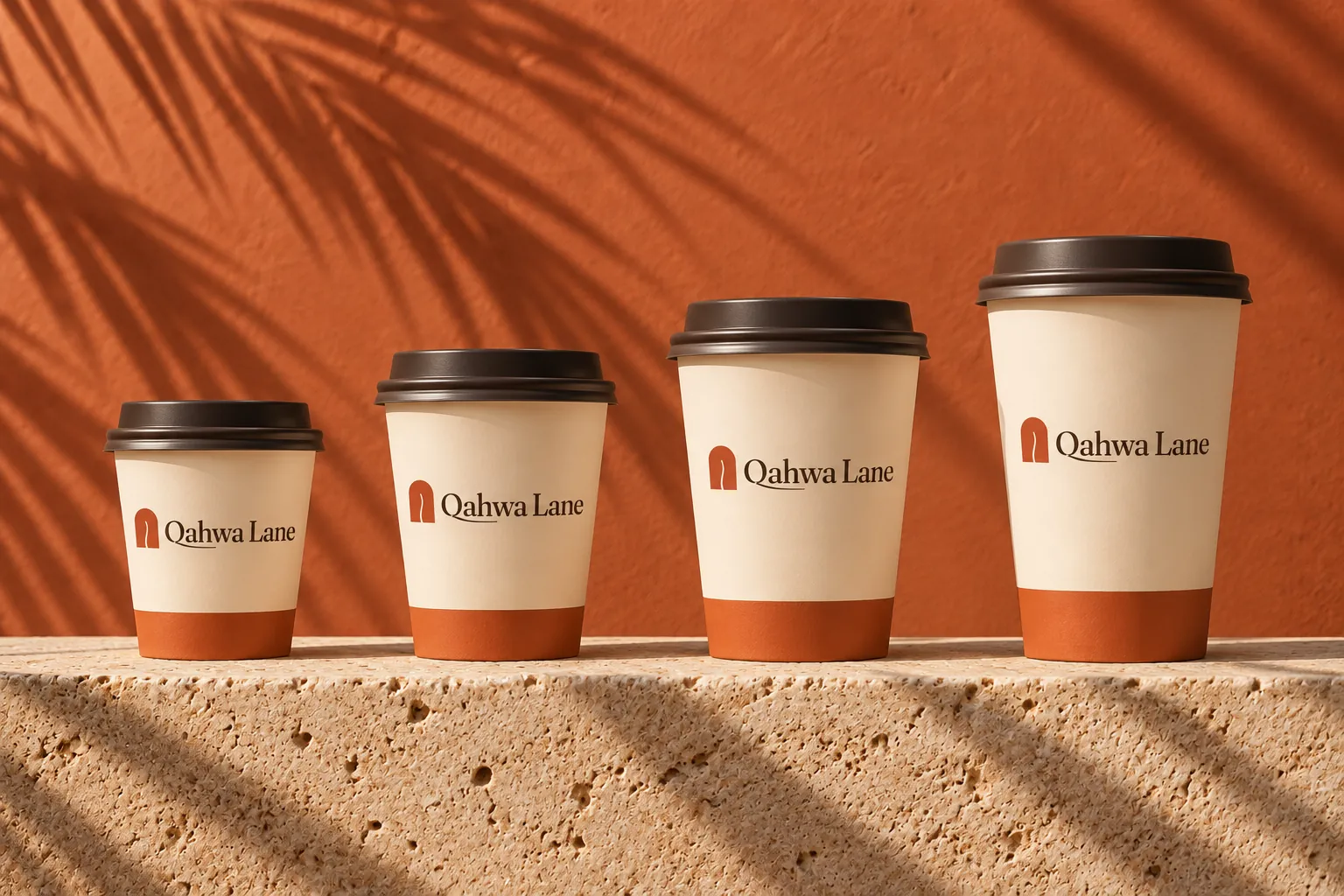
The most common paper cup sizes are 4oz (about 120 ml) for espresso, 8oz (about 240 ml) for flat whites and cappuccinos, 12oz (about 350 ml) for lattes and 16oz (about 470 ml) for large or iced drinks. Lids are sized by rim diameter: typically 62 mm, 80 mm and 90 mm.
That covers most cafés. The rest of this guide is the detail we go through with clients before they commit to a printed run: what the oz number really measures, how much a cup holds when filled to a sensible line, which sizes share a lid, how much print area you get on each, and how to choose a range of three sizes that works for your menu and your storeroom.
What the oz number actually measures
Cup sizes in the UAE, like most of the world, are named in US fluid ounces. One US fluid ounce is 29.57 ml, so an 8oz cup is nominally 237 ml. The catch is that the nominal size is a name, not a precise measurement. Manufacturers size cups so the named volume fits with room to spare below the rim, and brim-full capacity is usually 10 to 20% higher.
An 8oz cup filled to the brim often holds around 280 ml. Nobody serves a drink filled to the brim, though, so the working volume, filled to about 1 cm below the rim to leave room for a lid and a walk to the table, lands close to the nominal figure. When you set a recipe, measure the volume you actually pour into the cup you will actually use. Two 8oz cups from different factories can differ by 20 ml.
Metric naming exists too. Some suppliers sell cups as 250 ml, 350 ml and 500 ml rather than 8, 12 and 16oz. They are close equivalents, not identical, so compare dimensions rather than names when you switch supplier.
Paper cup size chart
Typical dimensions for hot paper cups. Every manufacturer's tooling differs slightly, so treat these as typical figures and confirm the exact spec of the cup you order.
| Size | Nominal ml | Typical brim-full ml | Top diameter | Bottom diameter | Height | Lid size | Typical use |
|---|---|---|---|---|---|---|---|
| 4oz | 118 | 125 to 140 | 62 mm | 45 mm | 60 mm | 62 mm | Espresso, tasting, gahwa at events |
| 6.5oz | 192 | 200 to 215 | 73 mm | 52 mm | 72 mm | 73 mm | Karak, small tea, cortado |
| 7oz | 207 | 210 to 230 | 73 mm | 52 mm | 80 mm | 73 mm | Tea, filter coffee, water at events |
| 8oz | 237 | 260 to 290 | 80 mm | 56 mm | 92 mm | 80 mm | Flat white, cappuccino, hot chocolate |
| 10oz | 296 | 310 to 340 | 90 mm | 59 mm | 96 mm | 90 mm | Regular latte, americano |
| 12oz | 355 | 380 to 410 | 90 mm | 60 mm | 112 mm | 90 mm | Latte, chai latte, standard takeaway |
| 16oz | 473 | 500 to 540 | 90 mm | 60 mm | 136 mm | 90 mm | Large latte, iced drinks, soup |
| 20oz | 591 | 620 to 660 | 90 mm | 62 mm | 158 mm | 90 mm | Extra-large iced drinks, juices |
Which size for which drink
Start with your menu, not with the size list. Count how many drinks you sell in each size today and how many you would like to sell. Most specialty cafés in Dubai and Sharjah end up with three hot sizes: 4oz for espresso and macchiato, 8oz for milk drinks with a strong coffee ratio, and 12oz for lattes. A chain with a value positioning tends to add 16oz, because a larger size at a modest price step lifts average spend.
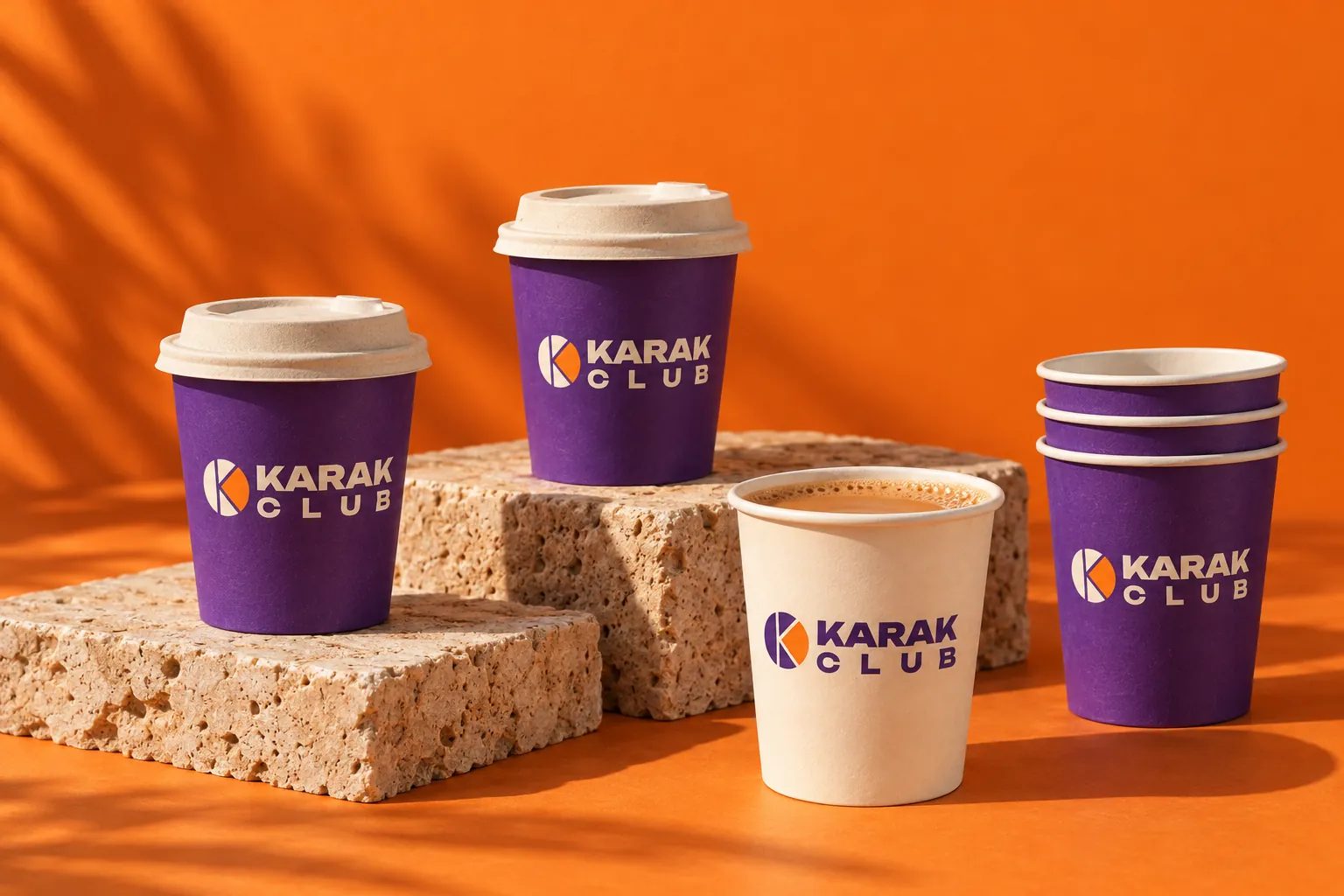
Karak stands and cafeterias are a different market. They sell high volumes of one drink at a low price, often in 4oz to 6.5oz cups, and the cup cost per serve matters more than anywhere else. Event caterers serving gahwa often use cups even smaller than 4oz; sizes around 2.5 to 3oz exist for that, though they are a specialist item.
For iced drinks, 16oz is the default, because ice takes up a third of the volume. If iced coffee is a big part of your summer trade, consider 20oz for the largest size. Cold drinks need a cold cup coated on both sides, which we explain in our post on single, double and ripple wall cups.
A quick sizing rule for a café menu
Espresso, macchiato, cortado
4oz. A 6.5oz is fine for cortado if you want a little room for latte art.
Flat white, cappuccino, piccolo
8oz. The 80 mm rim gives a good surface for latte art and the cup is comfortable in one hand.
Latte, americano, chai latte
12oz, with 10oz as an option if you want a smaller regular.
Large milk drinks and hot chocolate
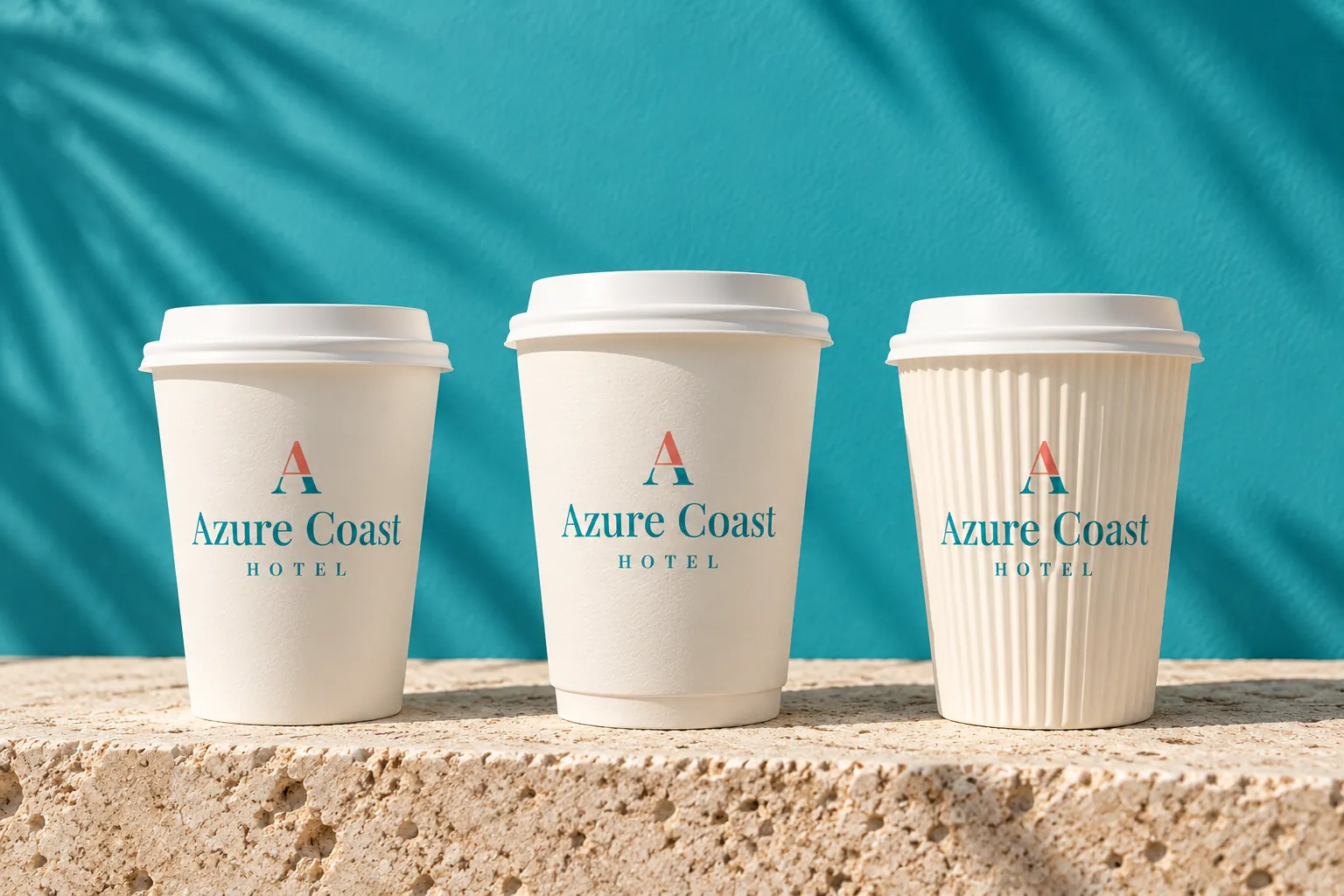
16oz, ideally in double wall so customers do not need a sleeve.
Iced coffee and iced tea
16oz cold cup, or 20oz if you sell a lot of large iced drinks.
Karak and tea
4oz to 7oz, depending on your price point and portion.
Lid sizes: which cups share a lid
Lids fit a rim diameter, not an oz size. Choosing cup sizes that share a rim cuts the number of lid lines you stock.
| Rim diameter | Cup sizes it usually fits | Notes |
|---|---|---|
| 62 mm | 4oz | Espresso lids are often skipped for dine-in; stock a small quantity for takeaway |
| 73 mm | 6.5oz, 7oz | Check fit carefully; this size varies more between manufacturers |
| 80 mm | 8oz | One of the most common lid sizes in the market |
| 90 mm | 10oz, 12oz, 16oz, 20oz | One lid line can cover your three largest sizes |
Why rim fit matters more than the label
A lid that fits on paper but not in practice is the most common complaint we hear after a supplier change. The rim of a paper cup is a rolled curl of board, and its outside diameter and thickness decide whether a lid snaps on. A difference of half a millimeter can turn a secure lid into one that pops off when a rider hits a speed bump on Sheikh Mohammed bin Zayed Road.
Double-wall cups add a second complication. The outer wall makes the cup wider below the rim, and some lids with a deep skirt sit against the outer wall instead of gripping the rim. Always test lids with the exact cup, in the exact wall type, before you order either in volume.
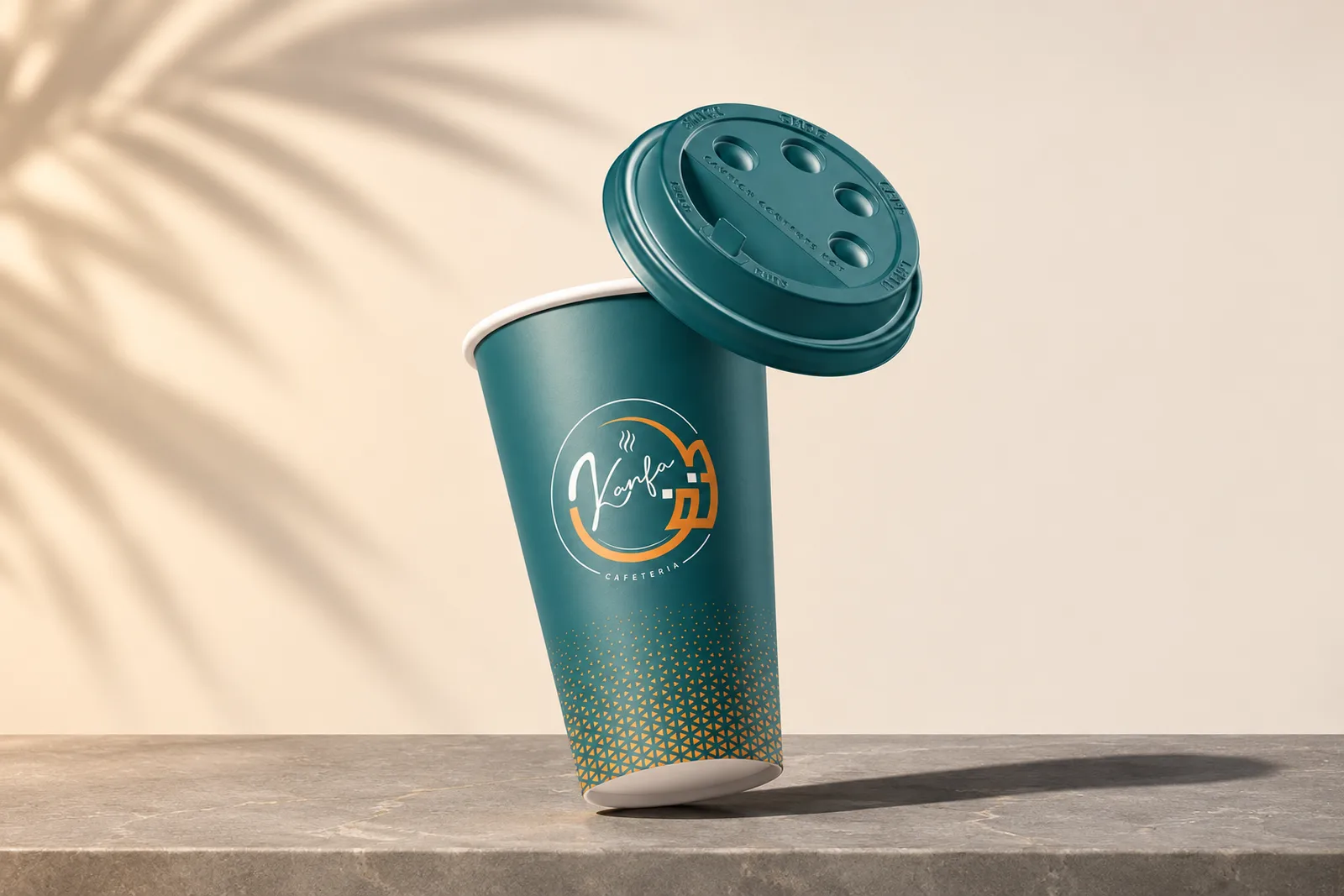
Since 1 January 2026 plastic lids are banned in the UAE, so you will be choosing between molded fiber, paper and plant-based CPLA lids. Fiber lids tend to be a little thicker at the skirt. Test those with particular care. Our post on whether paper cups are banned explains the lid rules in more detail.
Board weight by size and wall type
Board weight affects rigidity, heat comfort and cost. These are typical ranges in the industry; the right spec depends on the drink and how long the customer holds it.
| Cup type | Small sizes (4 to 7oz) | Medium (8 to 12oz) | Large (16 to 20oz) |
|---|---|---|---|
| Single wall, hot | 190 to 230 gsm + PE | 230 to 280 gsm + PE | 260 to 300 gsm + PE |
| Double wall, hot | Inner 230 gsm + outer 230 to 250 gsm | Inner 250 to 280 gsm + outer 250 to 300 gsm | Inner 280 gsm + outer 280 to 300 gsm |
| Ripple wall, hot | Rarely made | Inner 250 to 280 gsm + ripple wrap | Inner 280 gsm + ripple wrap |
| Cold cup (double coated) | Rarely made | 230 to 280 gsm, coated both sides | 260 to 320 gsm, coated both sides |
Cold cup sizes are not quite the same
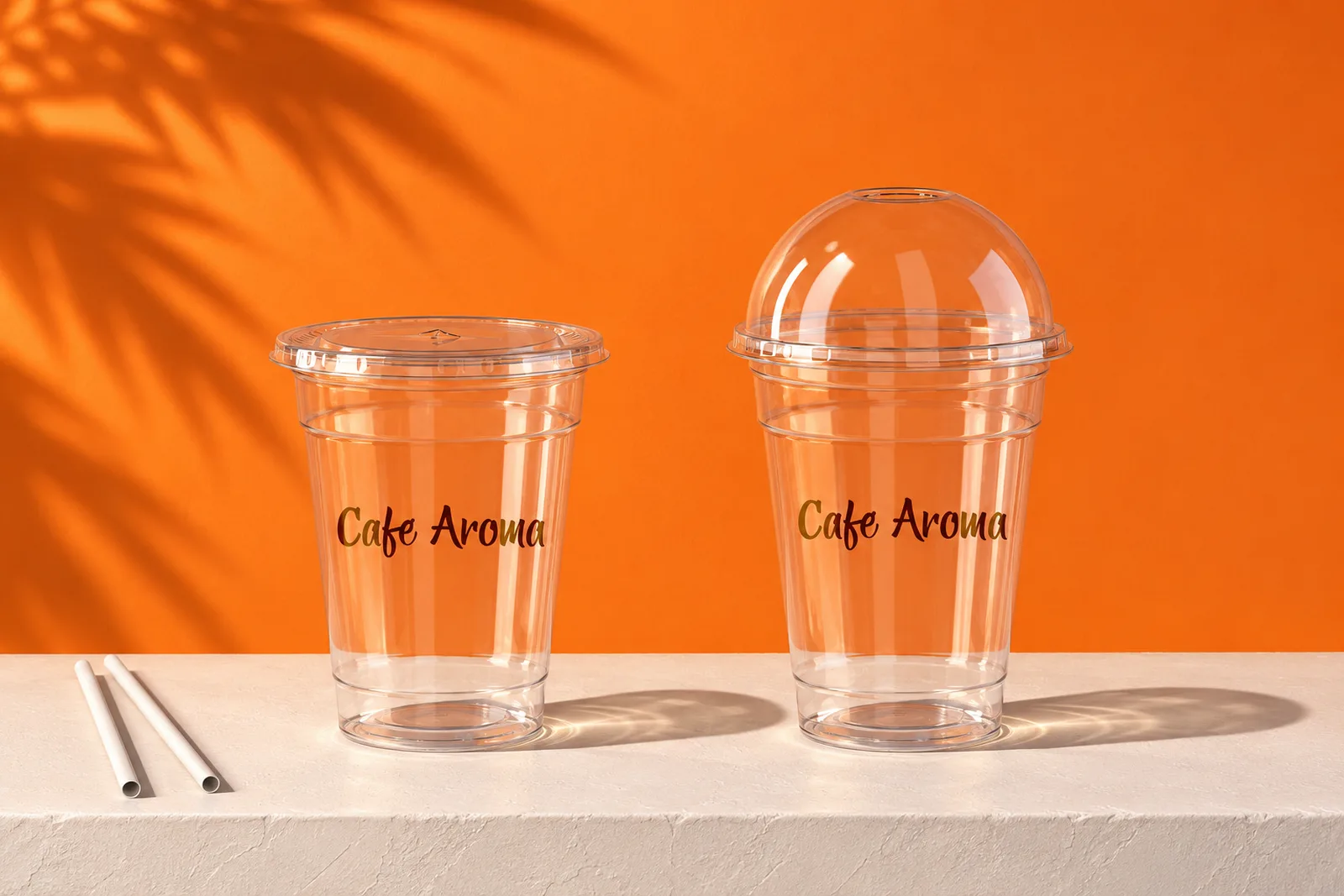
Paper cold cups follow the same oz naming, but the common sizes skew larger: 12oz, 16oz, 20oz and sometimes 22oz. Many cold cups share the 90 mm rim of the hot range, which helps if you want one lid family, while others use a wider rim borrowed from the old clear-plastic cups. Ask for the rim diameter before you order lids or straws.
Cold cups are coated on both sides so condensation does not soften the outer wall. That coating changes how ink sits on the surface, so expect your printer to adjust color slightly between your hot and cold ranges. If exact brand color across both matters, approve a proof on each board.

Print area: how much space your design gets
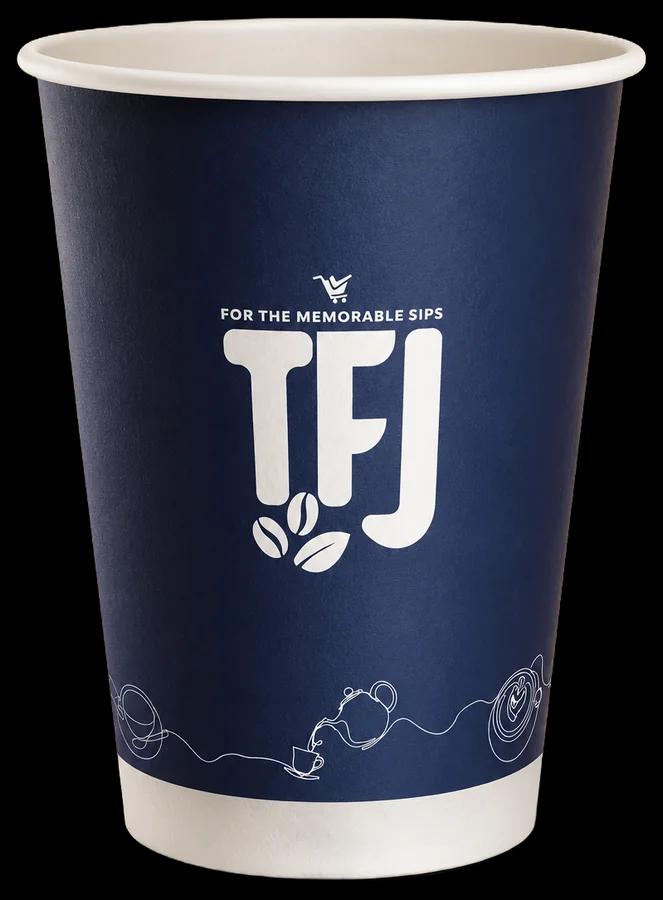
A paper cup starts as a flat curved blank, called a fan, which is printed, die-cut and then wrapped and sealed around a base. The printable area is the whole fan minus a narrow seam overlap and a band at the top where the rim curls. On an 8oz cup that leaves roughly 250 mm of curved width by about 85 mm of height. On a 12oz cup you get about 280 mm by 105 mm, and on a 16oz about 280 mm by 130 mm. These are approximate figures for planning. Your printer will send the exact template.
Design for the curve. A logo placed near the top edge of the fan bends into an arc once the cup is formed, and text running across the seam will break. We ask clients to keep key elements at least 10 mm away from the seam and from the rim curl, and to avoid fine text below 6 pt on the lower part of the cup, where the fan narrows.
Think about which side faces the customer. A right-handed barista holds the cup by the seam side and hands it over with the opposite face forward. Put your logo there. Put the social handle or a QR code on the side the customer sees when they lift the cup to drink.
Choosing a range: three sizes or four?
Every extra size costs money twice: once in a separate print run, because each size has its own fan template and plate set, and again in storage. Cups ship in cartons, and a café that stocks five sizes plus lids in three diameters can lose a storeroom to packaging.
We usually recommend three printed sizes and, if you need them, a plain cup for the low-volume extremes. For example, print 8oz, 12oz and 16oz in your full design, and use a plain or one-color 4oz for espresso, which many customers drink at the counter anyway. Choosing 12oz and 16oz on the same 90 mm rim also means one lid line for your two biggest sellers.
Keep the design consistent across sizes but not identical. Scale the logo to each size rather than stretching one artwork. Your printer should supply a template for each size and check the files before plates are made.
Storage, cartons and reorder points
Cups ship nested in sleeves, typically 50 per sleeve, with 1,000 per carton for common sizes, although carton counts vary by size, wall type and supplier. Double-wall cups nest less tightly than single wall, so a carton of double-wall cups takes noticeably more space for the same count.
Work out your weekly usage per size, multiply by your supplier's lead time for a printed reorder plus a safety margin, and that is your reorder point. For a printed run with us, plan on delivery in 1–2 weeks after proof approval. Running out of printed cups and filling the gap with plain stock happens more than people admit, and customers notice.
How to order printed cups in the right sizes
Count your drinks by size
Use two to four weeks of sales data. If you are opening, use your menu plan and a conservative split.
Request samples of each size and wall type
Pour your real recipes into them, fit the lids, and hold them for five minutes with a hot drink.
Lock sizes and lid diameters
Confirm the rim diameter of each cup in writing and order matching lids.
Brief artwork on the supplier's templates
Use the fan template for each size. Keep text away from the seam and rim curl.
Approve a proof
Check colors, positions and the seam line on the proof before printing starts. A physical proof is worth it for a first run.
Set reorder points
Base them on weekly usage and printed lead time, not on how full the storeroom looks.
Cups from GPP
We print and form single-wall, double-wall, ripple-wall and cold paper cups at our Ajman factory, alongside lids, sleeves and cup carriers. If you send us your menu and expected volumes, we will suggest a size range, send samples and give you the templates for each size. Ask about current minimum quantities and lead times when you request a quote, as both depend on size, wall type and print.
Products in this guide

GPP Production Team
Print & packaging specialists, Ajman
Written by the people who run our presses and finishing lines in Ajman, and checked against current UAE rules where regulation is involved. Published 8 Sept 2026; last reviewed 10 Oct 2026.