
The short answer
Good restaurant packaging starts from the menu: each dish needs a pack that holds its heat, grease and moisture for the length of the journey. In the UAE it must also meet the single-use plastic rules. Most kitchens settle on kraft or white paperboard boxes, greaseproof wraps, paper cups and a printed carry bag.
We print food packaging for restaurants, cafés and delivery kitchens from our presses in Ajman, and the same questions come up whether the client runs one shawarma counter or twelve virtual brands from a single kitchen in Al Quoz. This guide is the version of that conversation we would have over a sample table: what to put each dish in, what sizes to stock, how to stop fries going soft, what the plastic ban changed, and where printing earns its money.
Start with the menu, not the catalog
It is tempting to open a supplier's catalog and pick boxes that look good. Work the other way. List your menu and, for each item, note four things: how hot it leaves the kitchen, how much grease or sauce it carries, whether it steams, and how long it typically travels. A dry pastry going across the counter needs almost nothing. A saucy biryani going 8 km by motorbike in July needs a tight lid, a grease barrier and enough rigidity to survive a stack of other orders on top.
Then group items that can share a pack. A burger and a wrap might use the same box with a different sticker. Rice bowls and salads might share a kraft bowl in two sizes. The fewer distinct items you stock, the larger each order, and the lower your cost per piece.
Packaging by menu item
A starting point for the most common dishes in UAE takeaway and delivery.
| Menu item | Typical pack | Material | Watch for |
|---|---|---|---|
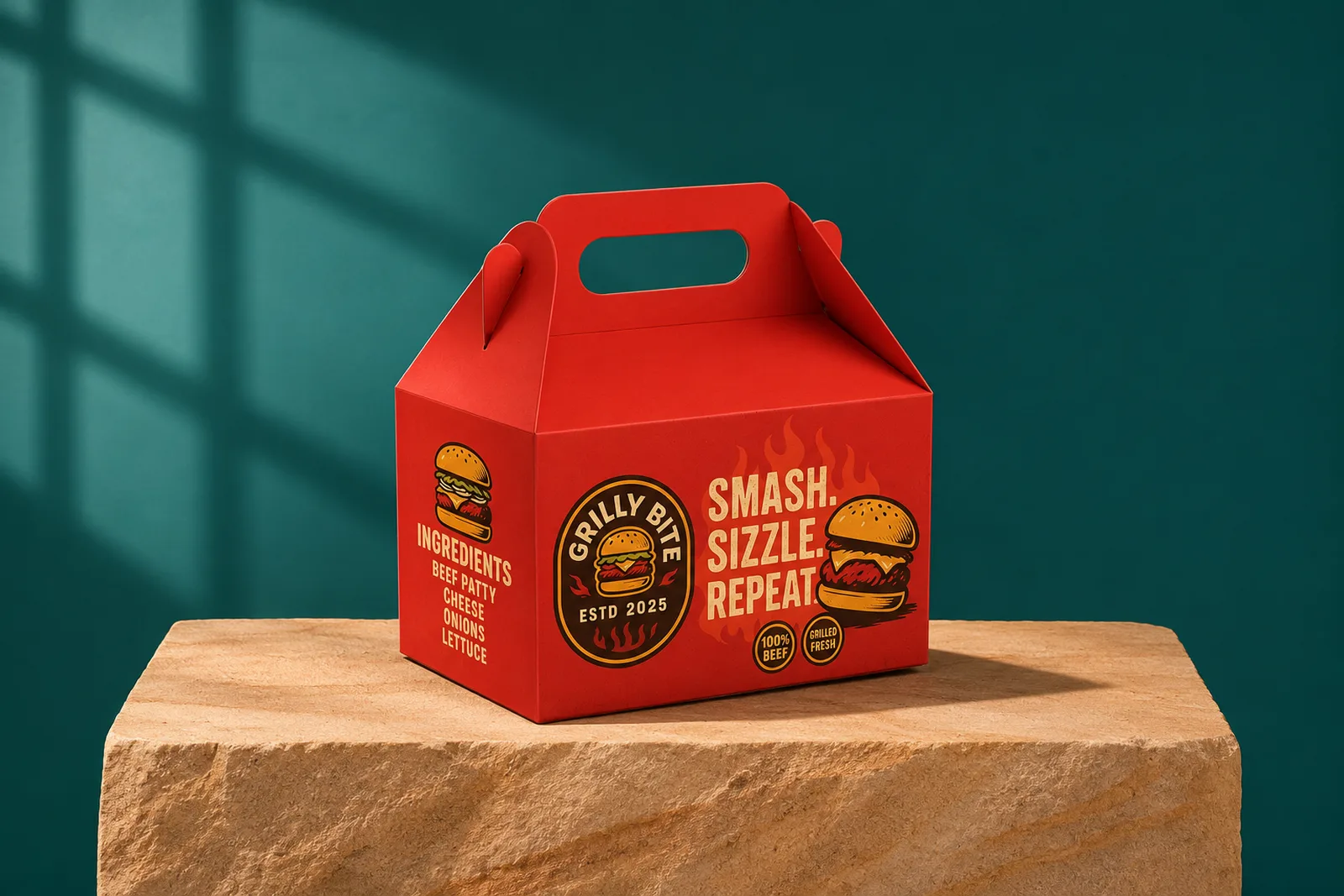
| Burgers | Burger box or greaseproof wrap in a bag | Grease-resistant kraft or white board; greaseproof paper | Steam softening the bun; add a vent or use a wrap for short trips |
| Fries and loaded fries | Fry holder, scoop or small box | Grease-resistant board | Closing fries in an airtight box makes them soggy |
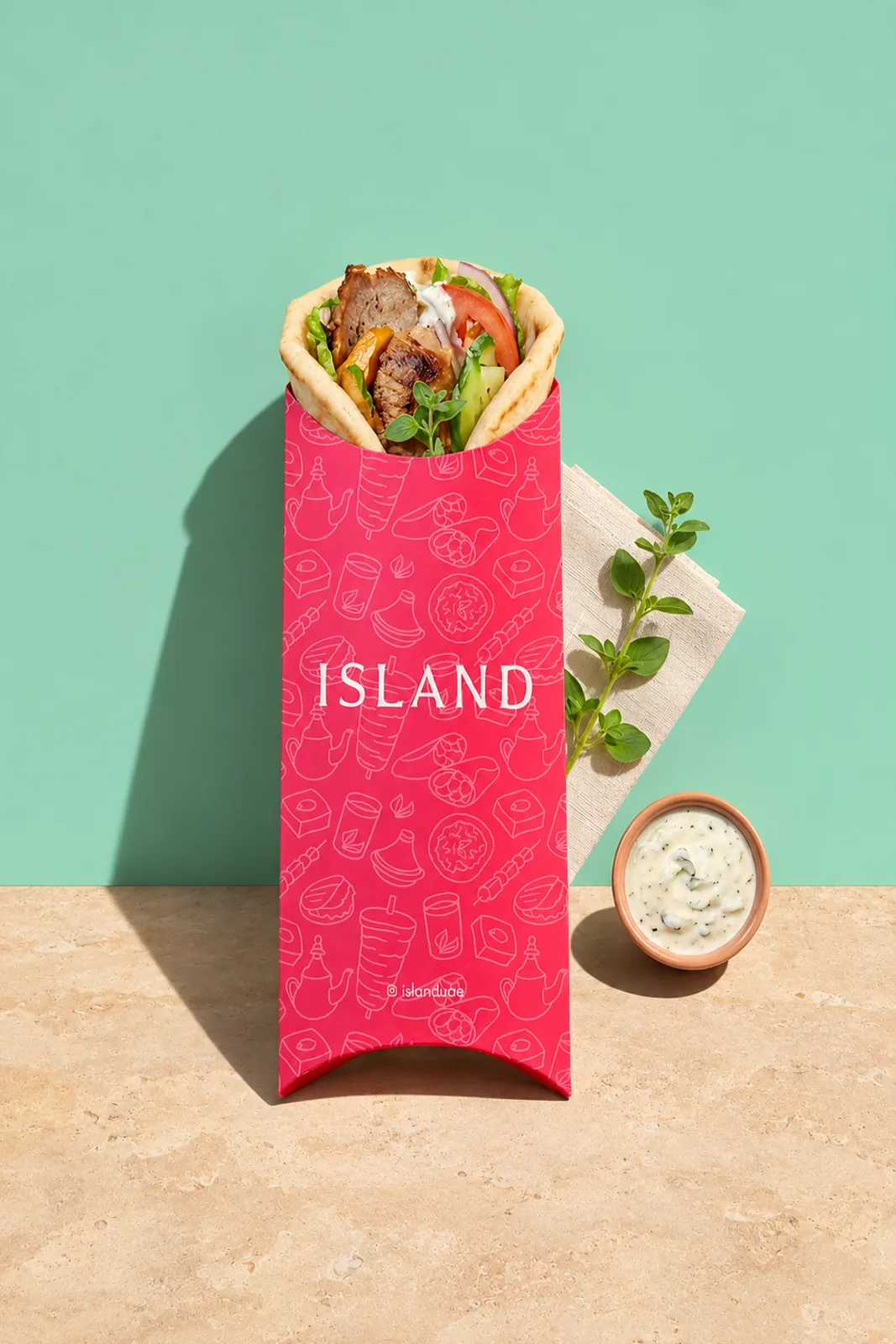
| Shawarma and wraps | Greaseproof wrap plus paper bag or sleeve | Greaseproof paper, kraft | Sauce leaks at the fold; a printed wrap doubles as branding |
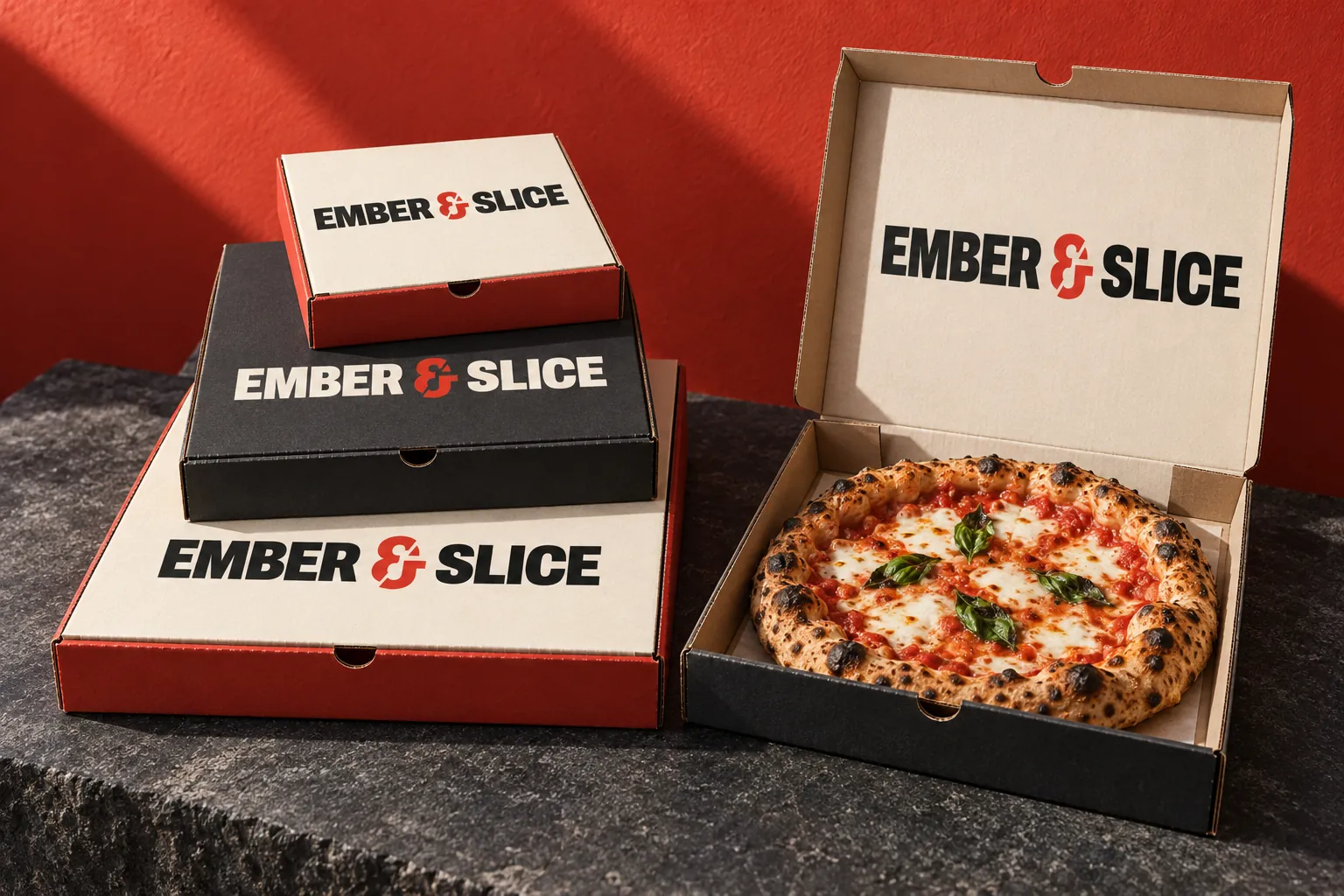
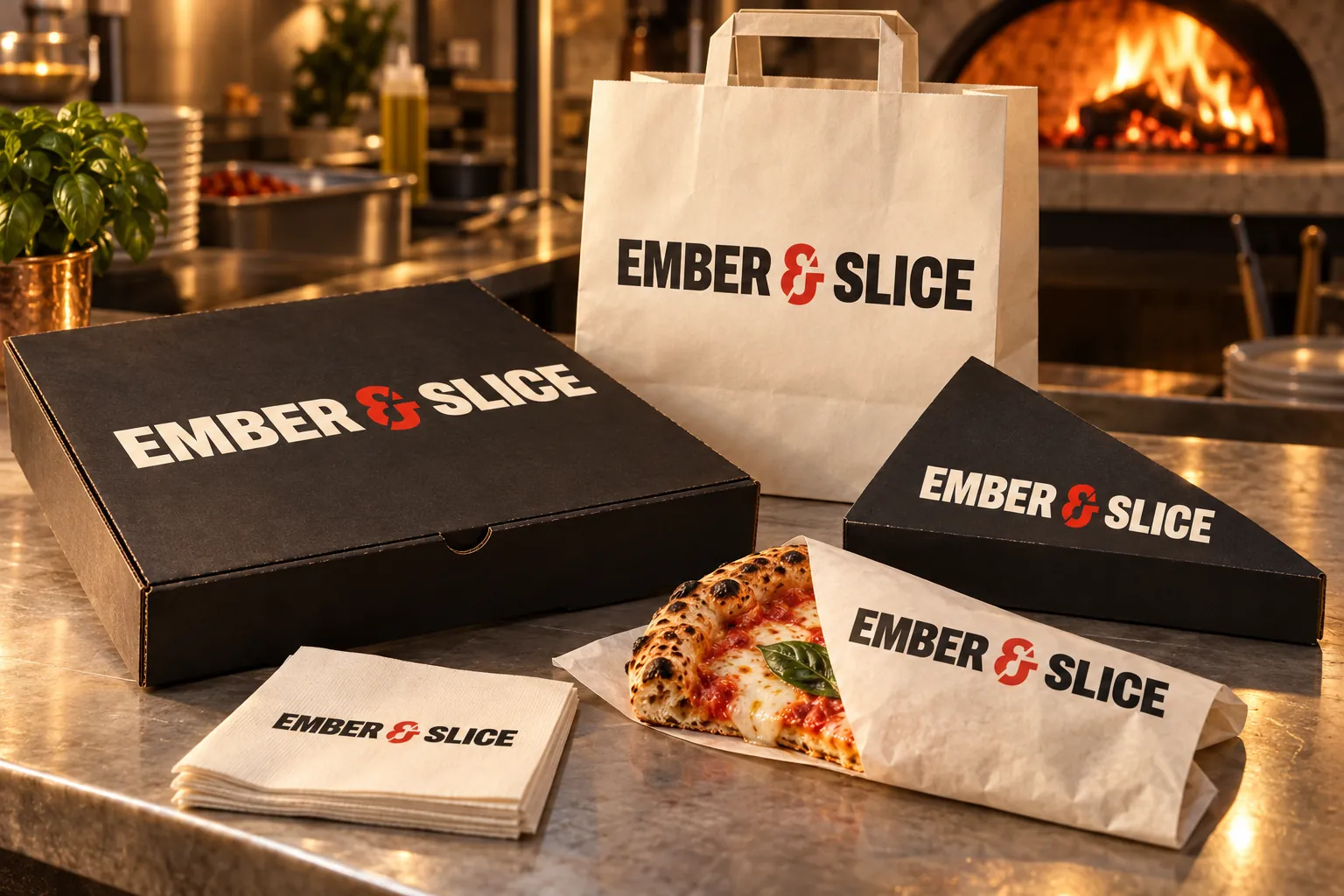
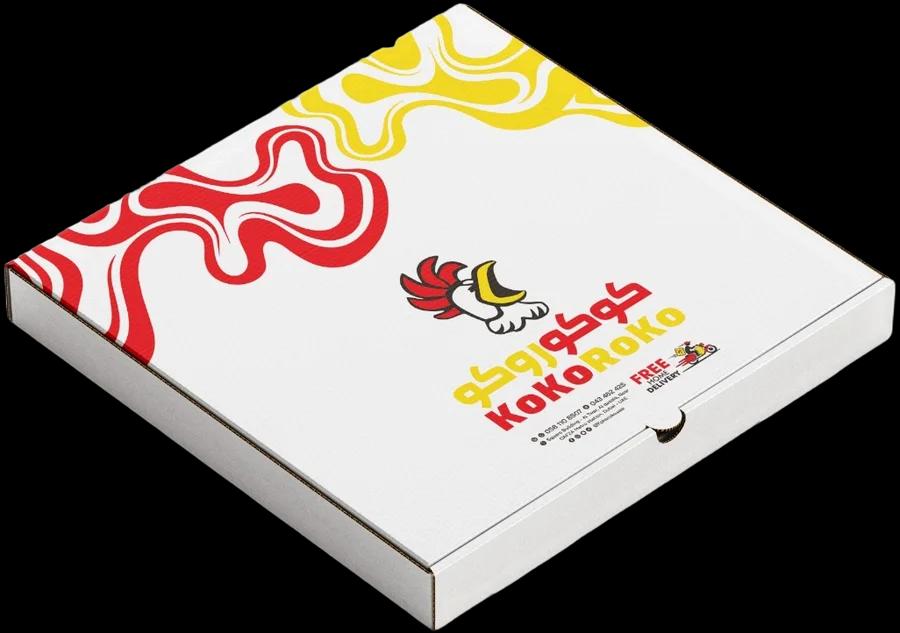
| Pizza | Corrugated pizza box | E-flute or B-flute corrugated board | Box size must match pizza size; see our pizza box size guide |
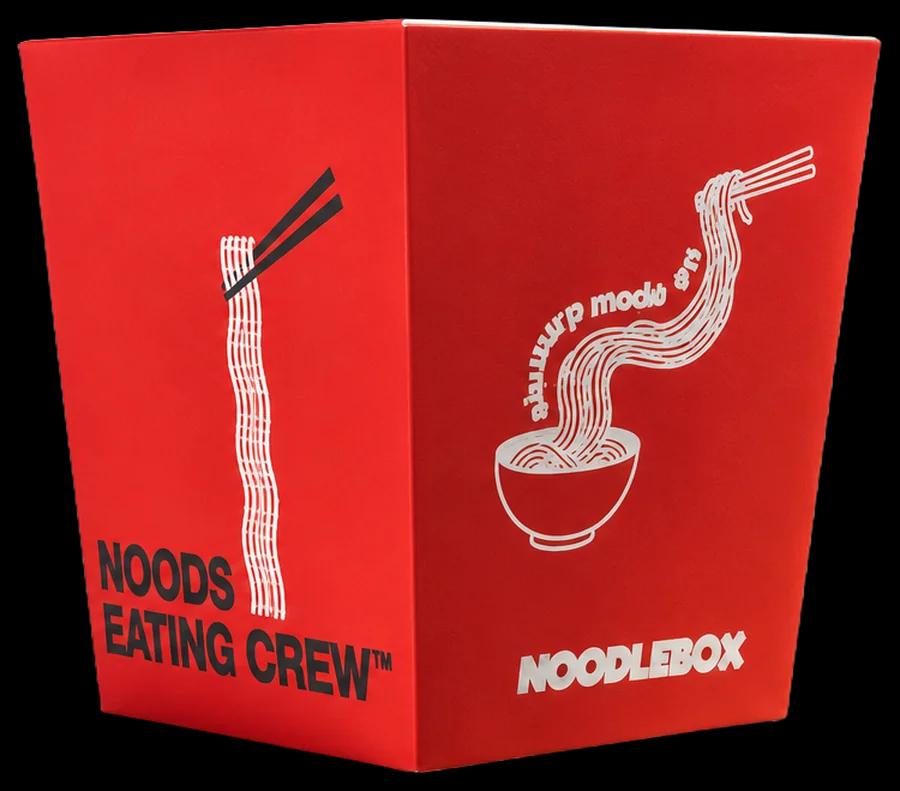
| Noodles and stir-fry | Folded noodle box or bowl with lid | PE or aqueous-coated board | Sauce soaking through seams |
| Rice, curry, biryani | Kraft bowl or paperboard container with lid | Coated board or bagasse | Lid fit and leak resistance in transit |
| Salads and poke | Kraft bowl with paper or plant-based lid | Coated board | Condensation; keep dressing separate |
| Sandwiches | Sandwich wedge, wrap or bag | Board or greaseproof paper | Crushing in the bag |
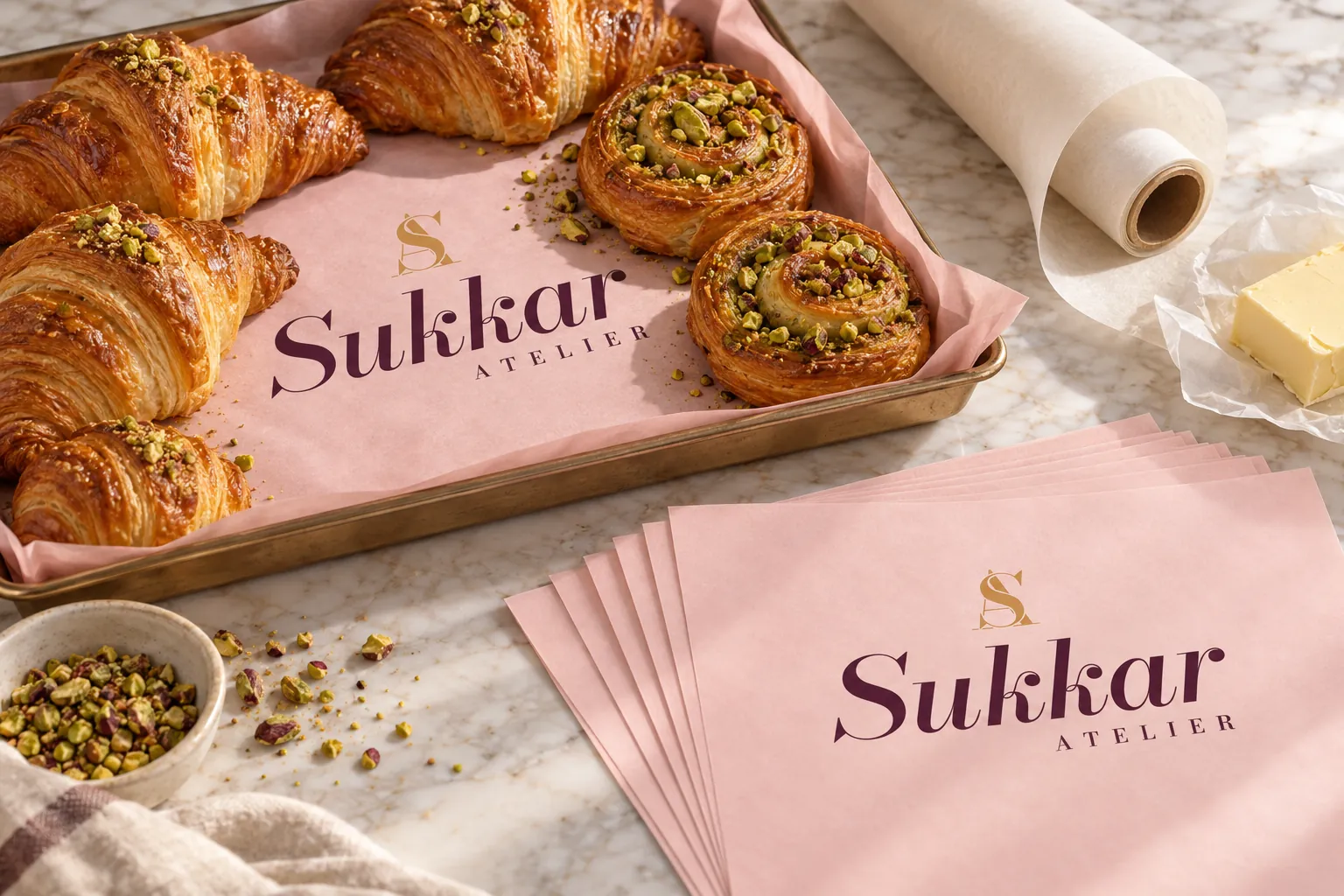
| Cakes and pastries | Cake box, pastry box or bakery bag | White board, kraft | Box height for decorated cakes |
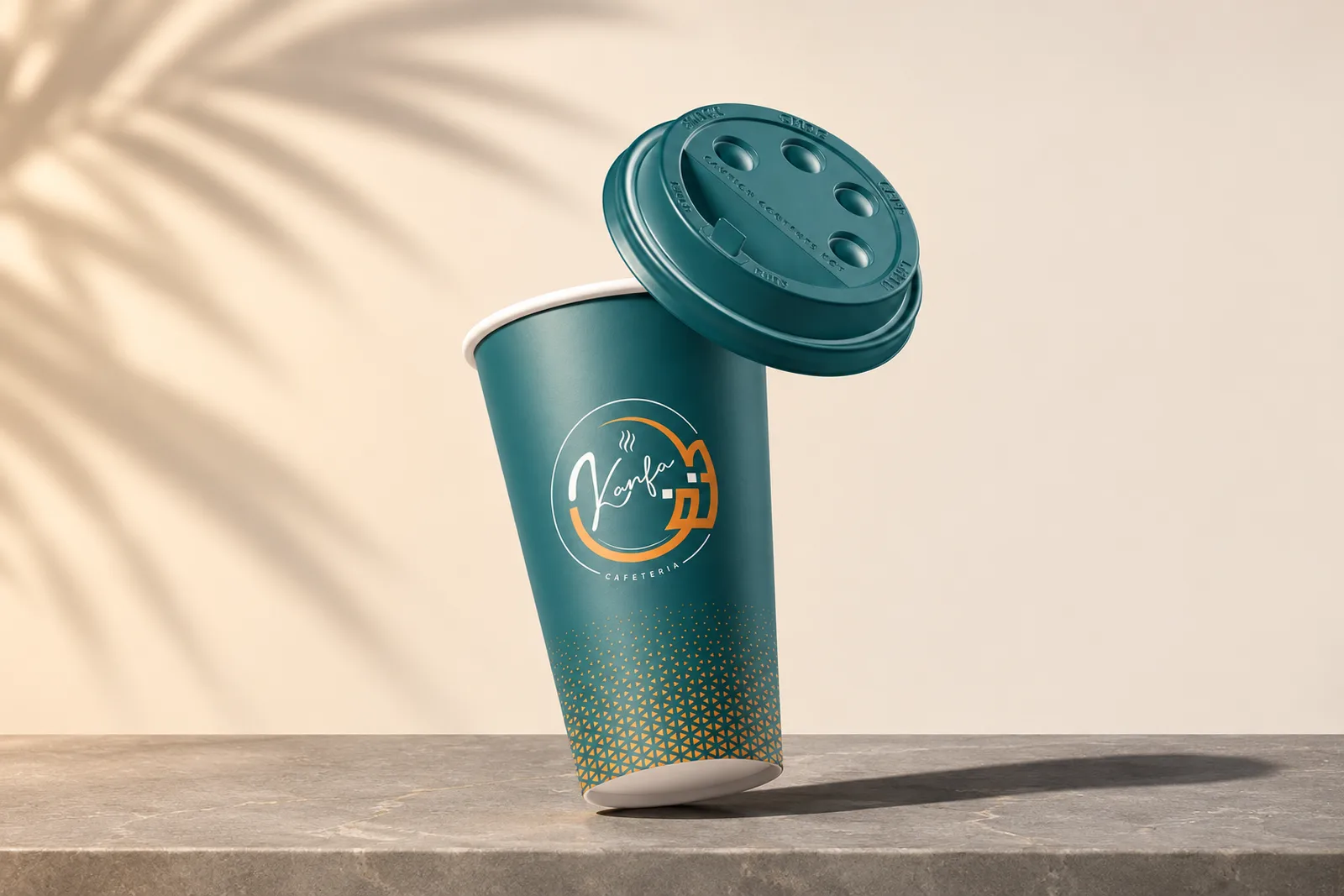
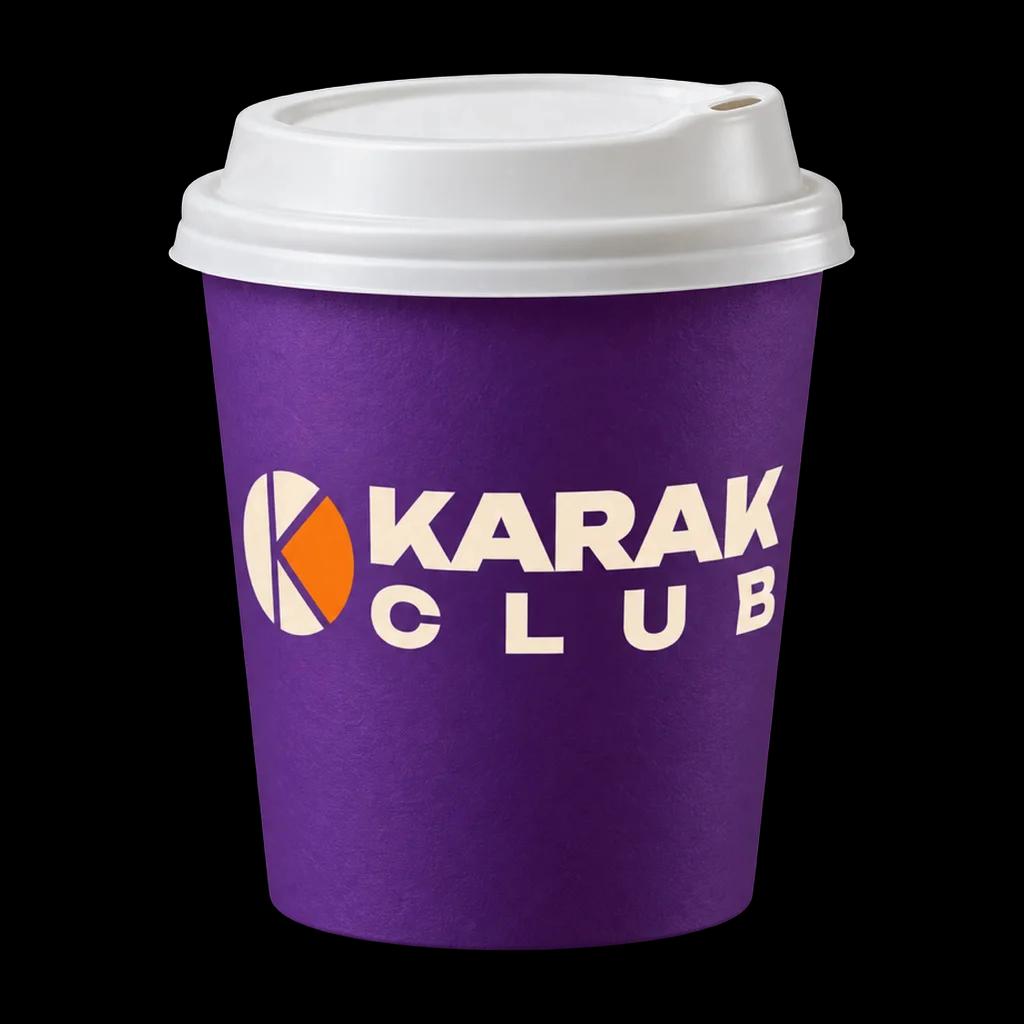
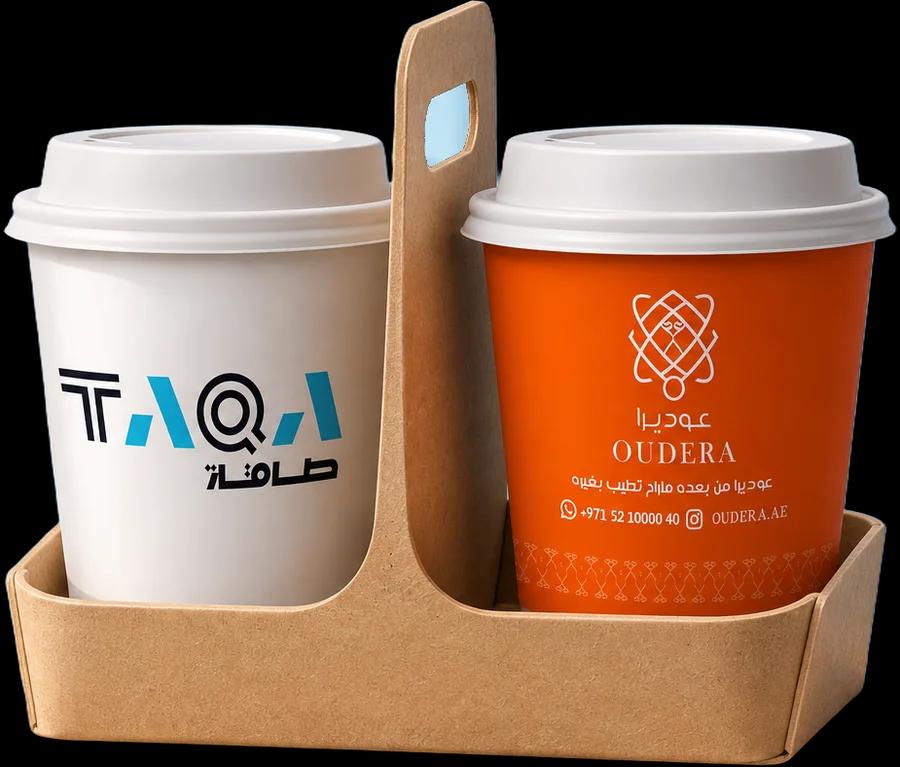
| Hot drinks | Paper cup with fiber or plant-based lid, carrier | PE or PLA-coated board | Lid fit; carriers for orders of two or more |
| Cold drinks | Paper cold cup or PLA cup | Board coated both sides | Condensation and straw fit |
Dine-in, takeaway and delivery need different things
Dine-in packaging only has to survive the walk to a table, and it is on show the whole meal. Print quality and feel matter most here: a well-printed placemat, a branded cup, a napkin with your mark.
Takeaway packaging travels by car or on foot for ten to twenty minutes. It needs to hold heat and stay closed, and it needs a bag that carries comfortably. Delivery packaging has the hardest job. Orders sit in an insulated rider bag, often stacked with other orders, and travel through traffic on a motorbike in some of the hottest conditions anywhere. The pack has to resist crushing, keep sauce in, let some steam out, and arrive looking like the photo on the app.
If you do all three, design for delivery first and use the same items for takeaway. Then decide whether dine-in deserves its own, nicer items.
Typical container sizes
Common sizes in the UAE market. Names and exact dimensions vary between manufacturers, so match sizes to your portions with samples.
| Container | Common sizes | Typical use |
|---|---|---|
| Kraft bowl | 500 ml, 750 ml, 1,000 ml, 1,300 ml | Salads, poke, rice bowls, pasta |
| Noodle box | 16oz (about 470 ml), 26oz (about 770 ml), 32oz (about 950 ml) | Noodles, fried rice, popcorn chicken |
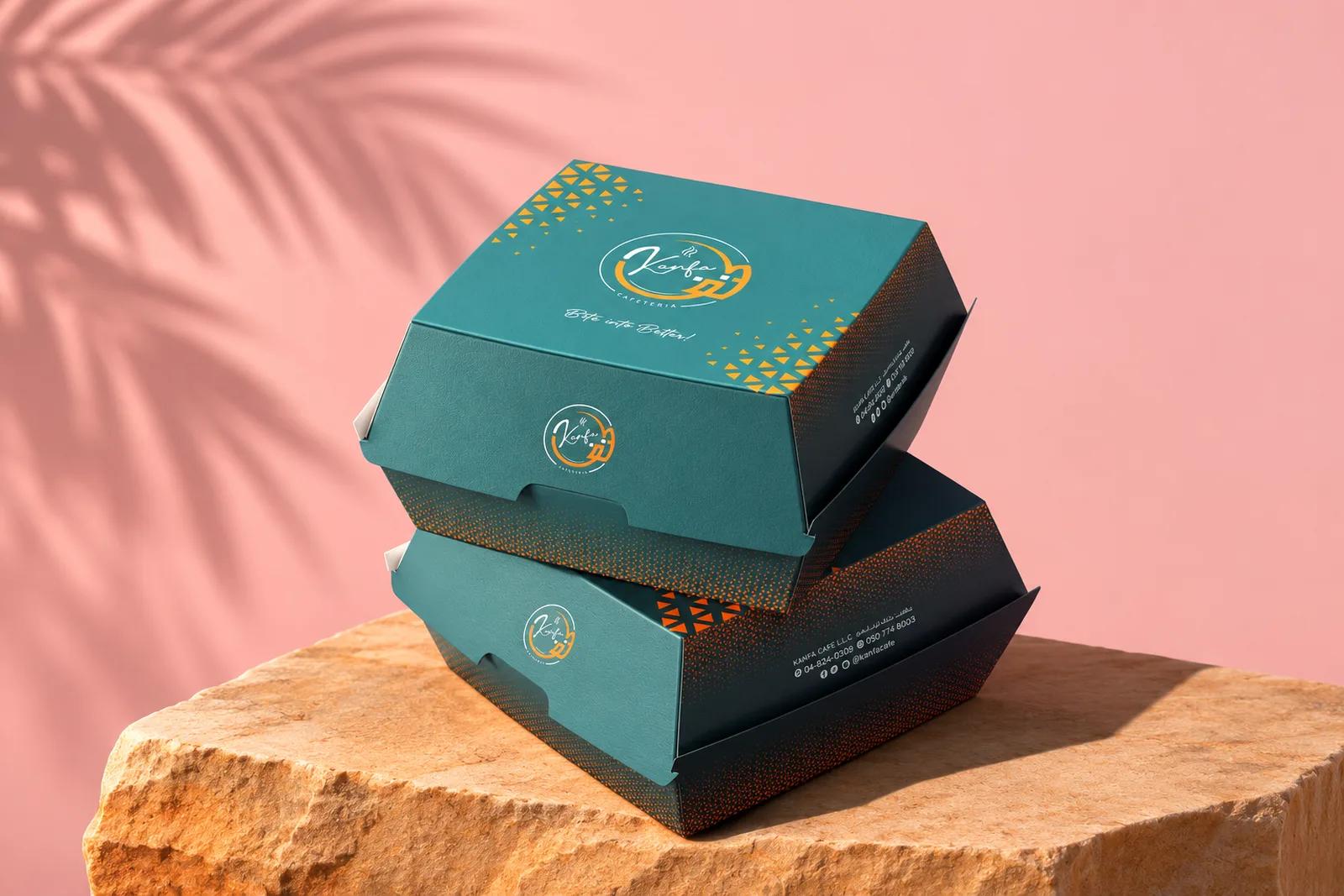
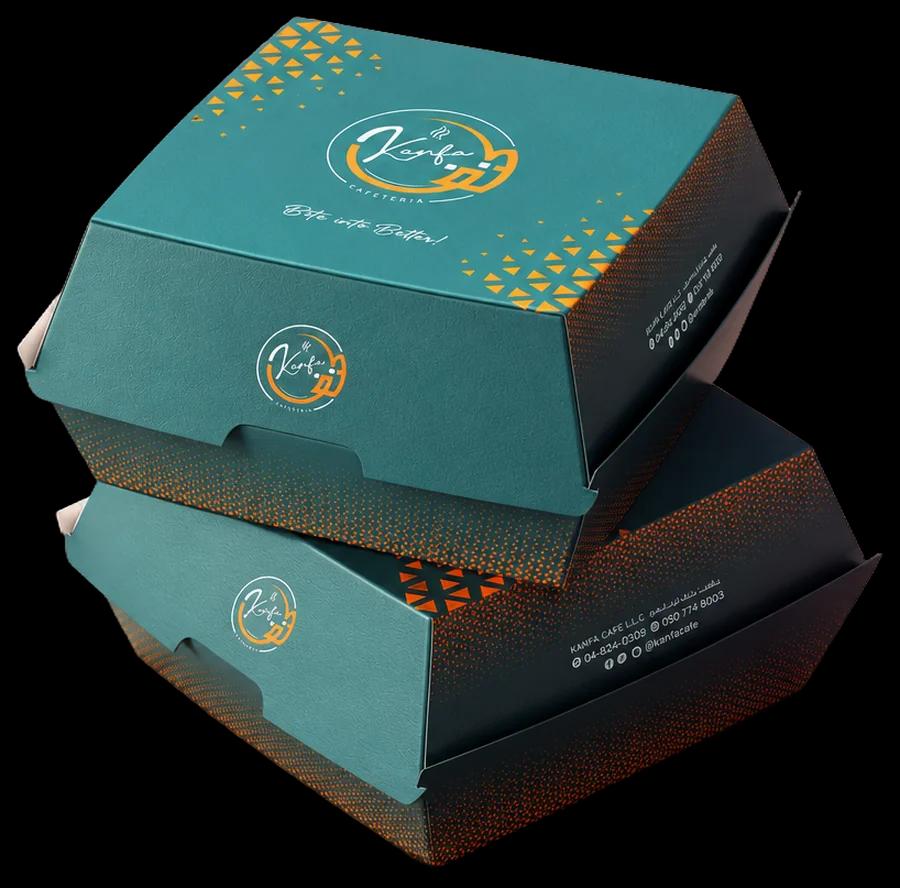
| Burger box | Small about 100 x 100 x 80 mm; regular about 115 x 115 x 90 mm; large about 130 x 130 x 100 mm | Burgers, sandwiches, desserts |
| Meal box (rectangular) | 1, 2 or 3 compartments; roughly 700 to 1,200 ml | Combo meals, grills, rice dishes |
| Soup container | 8oz, 12oz, 16oz, 26oz | Soups, curries, lentils, desserts |
| Sandwich wedge | Single and double fill | Cut sandwiches |
| French fries box | Small, medium, large | Fries, wedges, nuggets |
Heat, grease and steam: the three things that ruin food in transit
Grease is the most visible problem. Oil migrates into untreated board, leaves dark patches on the outside of the box and stains the rider bag. The fix is a grease-resistant board, a coating on the food-contact side, or a greaseproof liner. For burger and fried-chicken boxes we usually recommend grease-resistant board plus a printed greaseproof sheet, which also gives you a second branded touchpoint when the customer opens the box.
Steam is the less obvious problem. Hot food releases moisture, and in a sealed box it condenses and drips back onto the food. That is why fries go soft and burger buns go wet. Vented boxes, perforations, or packs that close loosely (a folded-top box rather than a tight clamshell) let moisture escape. For fries, an open fry holder inside a bag often beats a closed box.
Heat retention matters most for long delivery radii. Double-wall containers and thicker board hold heat longer than thin single-wall packs. Rider bags do most of the work, but the first ten minutes in your packaging decide how the food looks on arrival.
Food contact: what to ask your supplier
Any packaging that touches food should be made for food contact. That means food-grade board, a suitable barrier for the food type, and inks and adhesives selected for packaging use, with printing kept on the outside or separated from the food by a barrier. Ask your supplier what board and coating they use, whether the printed side ever touches food, and for a food-contact declaration for the material.
Municipal food inspectors in each emirate check food handling and storage, and packaging is part of that picture. Keep supplier declarations on file alongside your other food safety records. If you sell into hotels or large caterers, expect them to ask for this paperwork as part of their own audits.
What the plastic ban changed for restaurants
Styrofoam clamshells and soup cups were the cheapest way to keep food hot, and they are gone. Kitchens replaced them with paperboard boxes, kraft bowls and bagasse containers. Plastic cutlery moved to wood or paper. Plastic cup lids moved to fiber, paper or plant-based lids. Thin plastic carry bags were replaced by paper bags thick enough to clear the micron thresholds.
The change that surprised most of our clients was cost. Paper alternatives often cost more per unit than the plastic and styrofoam they replaced, and some kitchens tried to absorb that by buying the cheapest paper option. That backfired when boxes leaked or collapsed. The better approach was to cut the number of pack types, order the survivors in larger quantities, and print them, so the extra cost at least bought brand visibility.
Delivery: bags, carriers and tamper seals
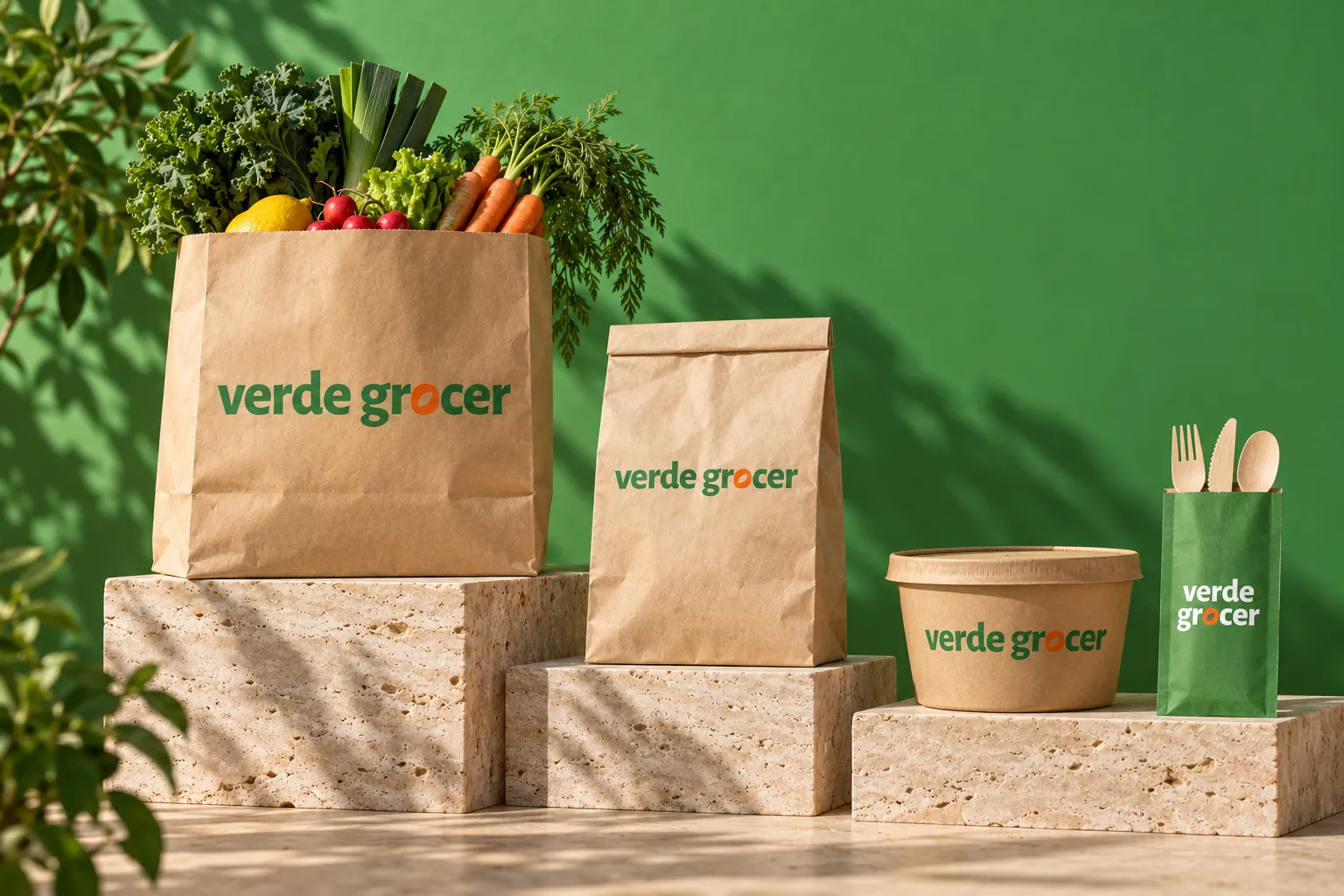
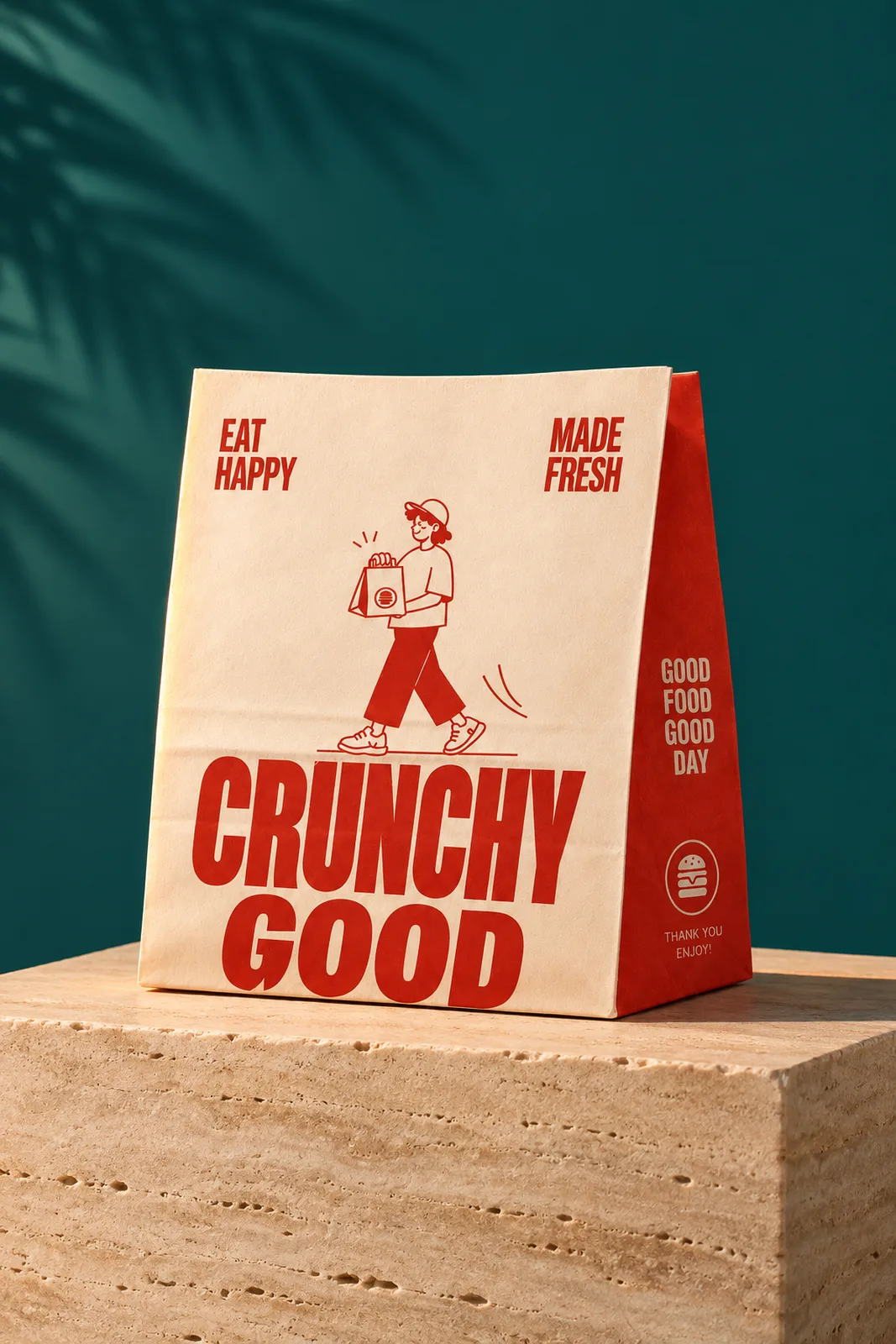
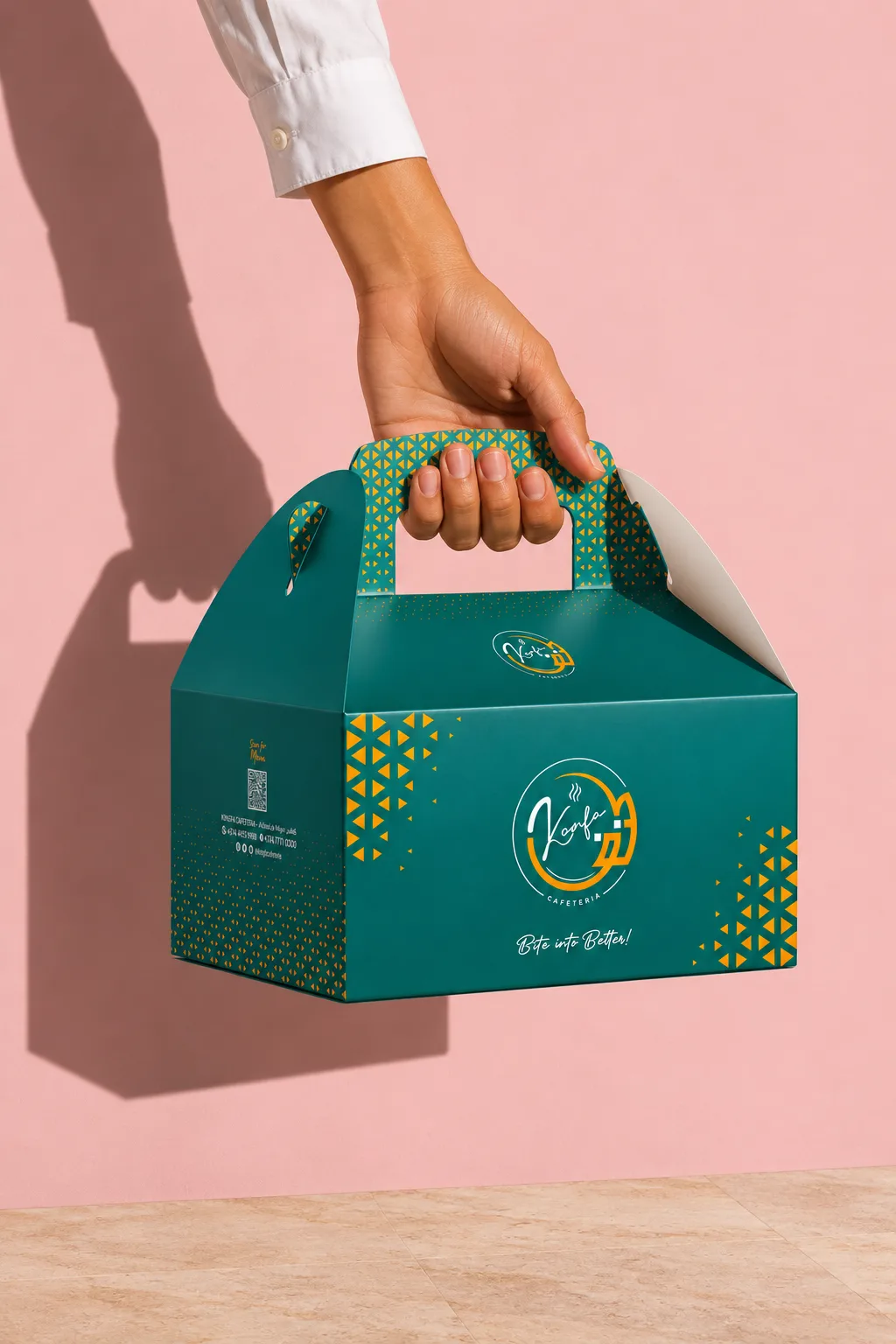
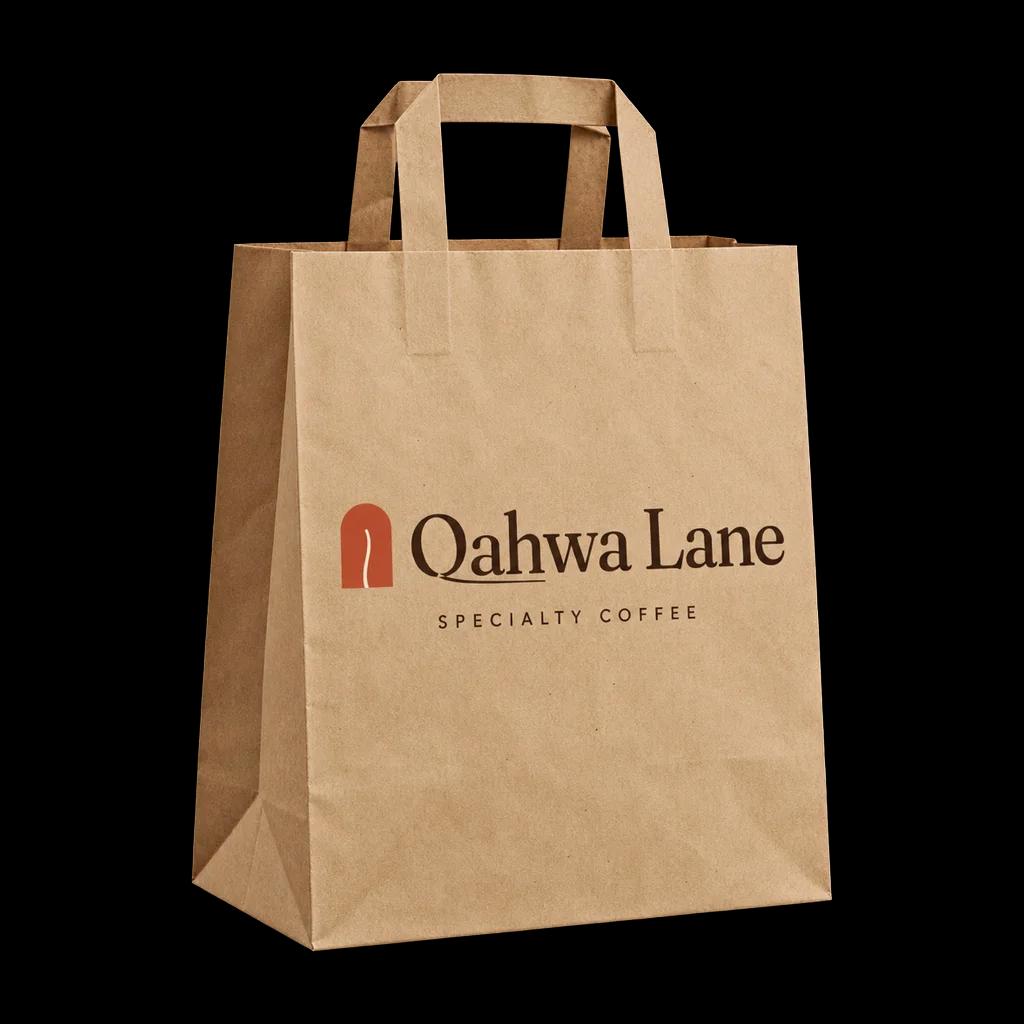
For delivery, the carry bag is the outer shell. A flat-bottomed kraft bag with a gusset keeps containers level, and a bag sized to your typical order stops boxes sliding around. Twisted or flat paper handles both work; flat handles are cheaper and fold flat for storage. Make sure the bag paper clears the 50-micron federal threshold and, for Dubai, 57 micrometres. Typical 80 to 120 gsm kraft is comfortably above both.
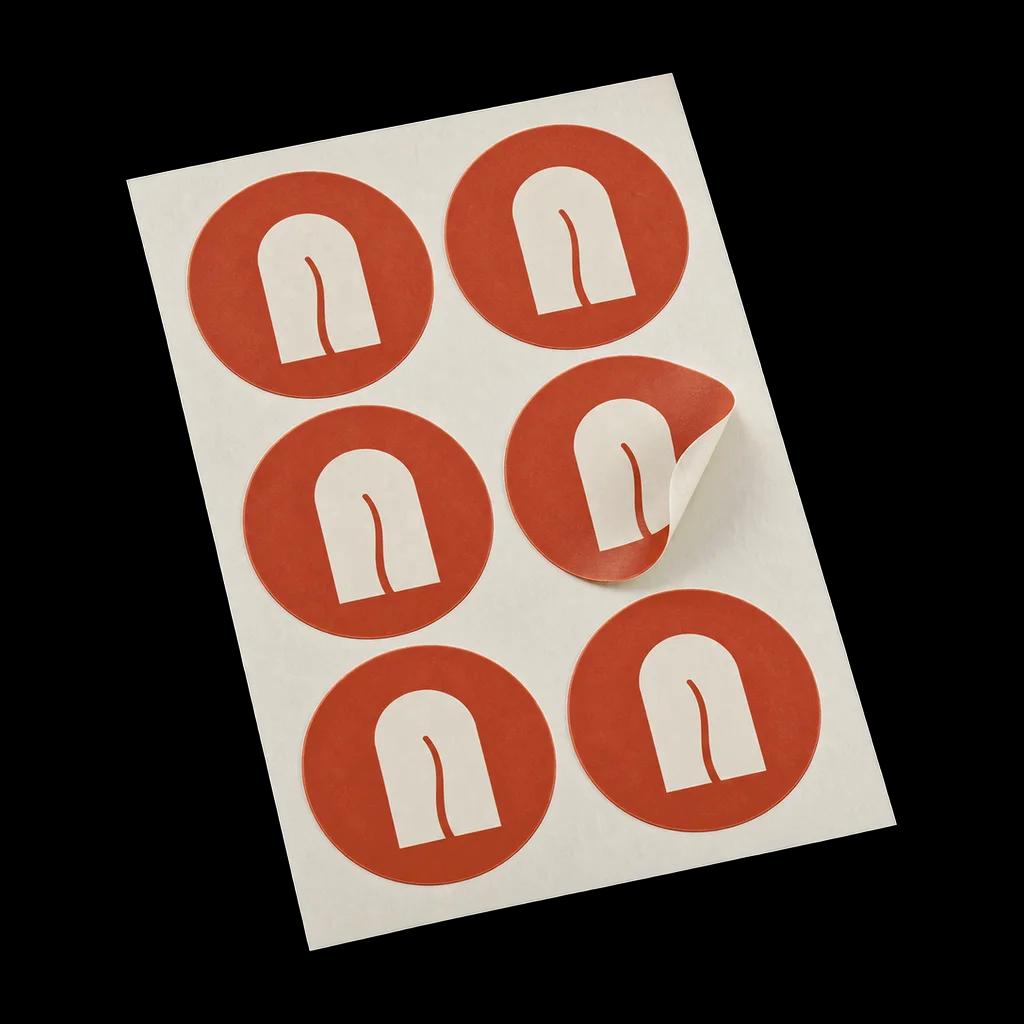
Cup carriers keep two or four drinks upright and stop lids being pushed off by other items. A tamper-evident seal sticker across the bag fold reassures customers that nobody opened their order on the way. It is also the cheapest printed item you can add, and it carries your logo onto every delivery.
Where to spend your print budget
Not every item needs custom print. If budget is limited, rank items by how many customers see them and for how long. The carry bag goes out the door and is seen on the street. The cup is held for twenty minutes and often photographed. The box is opened on a table or desk. A burger wrap is seen for thirty seconds. Napkins and liners are background.
For a new restaurant we usually suggest custom printing on the bag and cup first, then the main food box, and using plain kraft for the rest with a printed seal sticker. As volume grows, move printing down the list. Printing on kraft in one or two dark colors is economical and looks deliberate. Full-color on white board costs more and suits brands with photographic or color-heavy identities.
Cloud kitchens and multi-brand operations
A cloud kitchen running several virtual brands faces a stock problem: every brand wants its own packaging, and printing six versions of every box multiplies minimum orders. The common answer is a shared base pack in plain or neutral printed kraft, with brand identity carried by a printed sleeve, a sticker, a printed greaseproof sheet and a brand-specific bag. This keeps box stock in one or two lines while each brand still looks distinct on arrival.
If one brand dominates your orders, give it fully printed boxes and keep the shared system for the rest. Review the split every quarter as order mix changes.
How to source restaurant packaging, step by step
List your menu items and journeys
Note heat, grease, steam and travel time for each dish.
Group items into as few pack types as possible
Aim for shared sizes and lids across dishes.
Order samples and test with real food
Pack your hottest, oiliest and sauciest dishes, wait the length of a typical delivery, then open them. Check leaks, grease marks, sogginess and lid fit.
Confirm compliance and food-contact paperwork
Check each item against the plastic rules and ask for food-contact declarations.
Decide what to print
Start with bag and cup, then boxes. Use stickers and printed sheets to brand plain items.
Brief artwork and approve proofs
Use your supplier's dielines and templates for each item.
Set reorder points
Base them on weekly usage and printed lead time, with a buffer for Ramadan and other peak periods.
Common mistakes we see
Too many SKUs
Ten box sizes for ten dishes means ten small orders at high unit prices.
Testing with cold food
Packaging that holds a cold sample can fail with food at 80°C.
Sealing fries and fried chicken airtight
Steam turns crisp food soft within minutes.
Forgetting the lid
A compliant cup or bowl with a banned plastic lid is still non-compliant.
Ignoring the bag
The bag is the most-seen piece of packaging and the one most likely to fail the micron rules if bought on price alone.
Working with GPP
We make paper bags, paper cups, food boxes and containers, pizza boxes, greaseproof wraps, cup carriers, napkins and labels at our Ajman factory, printed on German-built Heidelberg offset presses with in-house die-cutting and finishing. Send us your menu and expected weekly volumes. We will suggest a pack for each item, send samples to test with your food, and quote the items you choose to print. Ask about minimum quantities and lead times for each item when you request the quote.
Products in this guide
GPP Production Team
Print & packaging specialists, Ajman
Written by the people who run our presses and finishing lines in Ajman, and checked against current UAE rules where regulation is involved. Published 17 Sept 2026; last reviewed 10 Oct 2026.