
The short answer
Since 1 January 2026 the UAE bans the import, manufacture and sale of single-use plastic cups and lids, cutlery, plates, straws, stirrers and styrofoam food containers, plus single-use bags of any material thinner than 50 microns. Plastic shopping bags have been banned nationally since 1 January 2024. Dubai and Abu Dhabi run their own, earlier timelines on top.
We print paper cups, bags and food boxes for cafés, bakeries and cloud kitchens across the Emirates, so we spent much of 2025 answering the same questions on the phone: does this lid still count, is a paper bag safe, what about stock already in the warehouse. This guide collects those answers in one place. It explains the rules as published, the dates that matter in each emirate, and the practical swaps we see food businesses make. It is not legal advice. Where the wording of a rule leaves room for interpretation, we say so and point you to the authority that can confirm it.
Three layers of rules: federal, Dubai and Abu Dhabi
Most confusion comes from the fact that there is more than one rulebook. The federal rule is Ministerial Decision No. 380 of 2022 on regulating single-use products, issued by MOCCAE. It applies across all seven emirates and works in phases: plastic shopping bags first, then a wider list of single-use plastic items from 2026.
Dubai moved earlier under its own instrument, Executive Council Resolution No. 124 of 2023, which Dubai Municipality enforces. Abu Dhabi started earliest of all, with the Environment Agency Abu Dhabi (EAD) banning single-use plastic bags in 2022 and expanded polystyrene (styrofoam) products in 2024. Sharjah, Ajman, Umm Al Quwain, Ras Al Khaimah and Fujairah follow the federal schedule, and several of them ran their own bag measures alongside it.
In practice, by October 2026 the three layers have largely converged. If you sell food in Dubai or Abu Dhabi you met the strictest dates already. If you trade in the northern emirates, the federal phase that started on 1 January 2026 is the one that changed your counter.
UAE plastic ban timeline at a glance
Dates are when each restriction took effect. Where press coverage and official summaries differ on the exact item list, we note it.
| Effective date | Jurisdiction | What became restricted | Instrument |
|---|---|---|---|
| 1 Jun 2022 | Abu Dhabi | Single-use plastic bags | EAD Single-Use Plastic Policy |
| 1 Jan 2024 | Federal (all emirates) | Single-use plastic shopping bags, including so-called degradable plastic bags | Ministerial Decision 380/2022, phase 1 |
| 1 Jan 2024 | Dubai | Single-use plastic bags (with a 25-fils charge on other single-use bags until 31 May 2024) | Executive Council Resolution 124/2023 |
| 1 Jun 2024 | Dubai | All single-use bags 57 micrometres thick or less, of any material, including paper and biodegradable bags | Executive Council Resolution 124/2023 |
| 1 Jun 2024 | Abu Dhabi | Single-use expanded polystyrene (styrofoam) cups, lids, plates, beverage containers and takeaway food containers | EAD Single-Use Plastic Policy |
| 1 Jan 2025 | Dubai | Styrofoam cups and food containers, plastic straws, plastic stirrers, plastic table covers, plastic cotton buds | Executive Council Resolution 124/2023 |
| 1 Jan 2026 | Federal (all emirates) | Plastic beverage cups and lids, cutlery, plates, straws, stirrers, styrofoam food containers and boxes; single-use bags of any material under 50 microns | Ministerial Decision 380/2022, phase 2 |
| 1 Jan 2026 | Dubai | Plastic plates, plastic cutlery (including chopsticks), plastic beverage cups and their lids. Some coverage also lists plastic food containers | Executive Council Resolution 124/2023, final phase |
What the federal 2026 phase covers
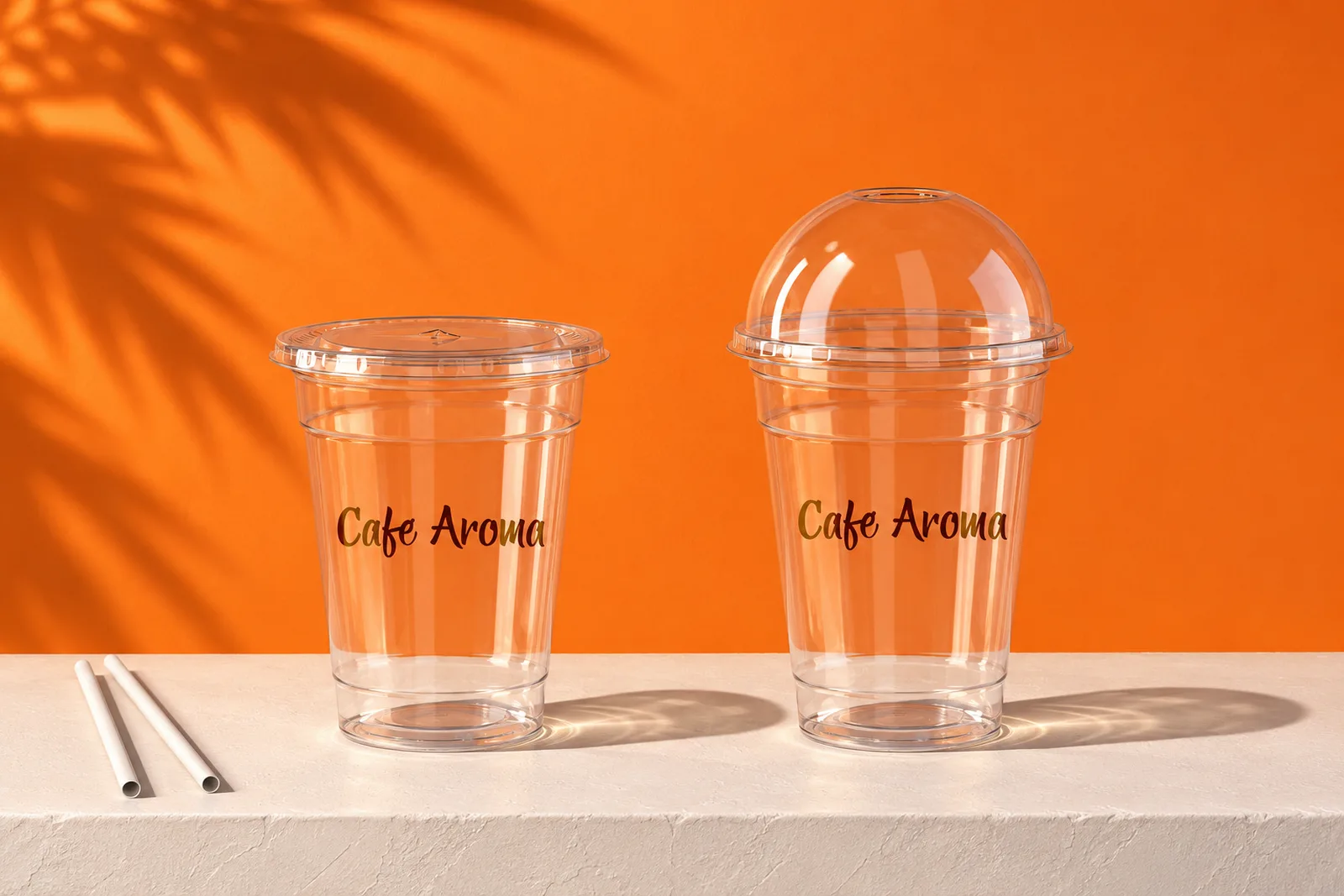
MOCCAE announced the second federal phase in December 2025, and it took effect on 1 January 2026. It bars importing, manufacturing and trading these single-use items when they are made of plastic: beverage cups and their lids; cutlery, meaning spoons, forks, knives and chopsticks; plates; straws; drink stirrers; and food containers and boxes made of styrofoam.
The same phase widened the bag rule. Single-use bags thinner than 50 microns are banned regardless of material. That sentence is the one that catches people out, because it means a thin paper bag can fall inside the ban even though it contains no plastic at all. We cover thickness in detail below.
Coverage of MOCCAE's announcement also listed exemptions. The main one for manufacturers is goods produced solely for export or re-export. Reports also mentioned products made from recycled material within the UAE and certain bag types such as some medical and refuse bags. The scope of each exemption matters, so read the decision text or ask MOCCAE before you rely on one.
What Dubai's timeline added
Dubai's resolution ran in four steps. On 1 January 2024 single-use plastic bags were banned and a 25-fils charge applied to other single-use bags. On 1 June 2024 the charge ended and Dubai banned all single-use bags 57 micrometres thick or less, whatever they are made of. Press reports of the rule listed plastic, paper, plant-based and biodegradable bags, with exemptions for items such as bread bags, bin liners, and wrapping bags for vegetables, meat, fish and chicken.
On 1 January 2025 the ban extended to styrofoam cups and food containers, plastic straws, plastic stirrers, plastic table covers and plastic cotton buds. The final phase on 1 January 2026 added single-use plastic plates, plastic cutlery including chopsticks, and plastic beverage cups and their lids. Dubai Municipality published an awareness guide in English and Arabic alongside that announcement, and it is the best single document to check product definitions against.
Press coverage at the time reported fines starting at AED 200 for a first offense, doubling for repeat offences within a year up to AED 2,000. Treat those figures as reported, not as our statement of the law.
Abu Dhabi: bags in 2022, styrofoam in 2024
Abu Dhabi's Single-Use Plastic Policy dates from 2020. Single-use plastic bags went first, in 2022, and EAD later reported that hundreds of millions of bags had been avoided as a result. From 1 June 2024 EAD and the Abu Dhabi Department of Economic Development banned single-use expanded polystyrene products: cups, lids, plates, beverage containers and containers for food eaten on the spot or taken away.
The styrofoam rule carried exemptions for items not designed for single-consumer use, such as large storage boxes, coolers and retail trays for meat, fruit and dairy, and for medical products. If you run a supermarket or butcher counter in Abu Dhabi, those exemptions matter. If you run a shawarma stand, they do not.
The bag thickness rules: 50 microns federally, 57 in Dubai
Two numbers, two jurisdictions. The federal rule bans single-use bags under 50 microns of any material. Dubai's rule bans single-use bags 57 micrometres or less of any material. A micron and a micrometre are the same unit: one thousandth of a millimeter. So if you sell in Dubai, aim for bags thicker than 57 microns, and if you sell anywhere else in the UAE, thicker than 50.
Paper is sold by weight (grams per square meter, or gsm), and thickness depends on how dense the sheet is. From the papers we run, a rough guide: a typical 80 gsm kraft sheet measures somewhere around 100 to 120 microns, a 100 gsm kraft sheet thicker again, while a 35 to 40 gsm greaseproof or sandwich paper can measure 40 to 50 microns. These are typical figures, not guarantees. Two papers of the same gsm from different mills can differ by 20% in caliper.
What that means on the counter: a standard twisted-handle or flat-handle kraft carrier made from 80 to 120 gsm paper sits well clear of both thresholds. The risk sits with very light bags: thin bakery bags, sandwich bags and small sachet-style pouches. Some of these may fall under an exemption (Dubai's list, for example, named bread bags). Others will not. Ask your supplier for the caliper of the actual paper, measured with a micrometer, and keep the spec sheet on file in case an inspector asks.
Banned item, compliant swap
These are the swaps we see most often across cafés, bakeries, restaurants and delivery kitchens. Check each swap against the rule in your emirate before you place a large order.
| Banned or restricted item | Typical swap | Notes from the press floor |
|---|---|---|
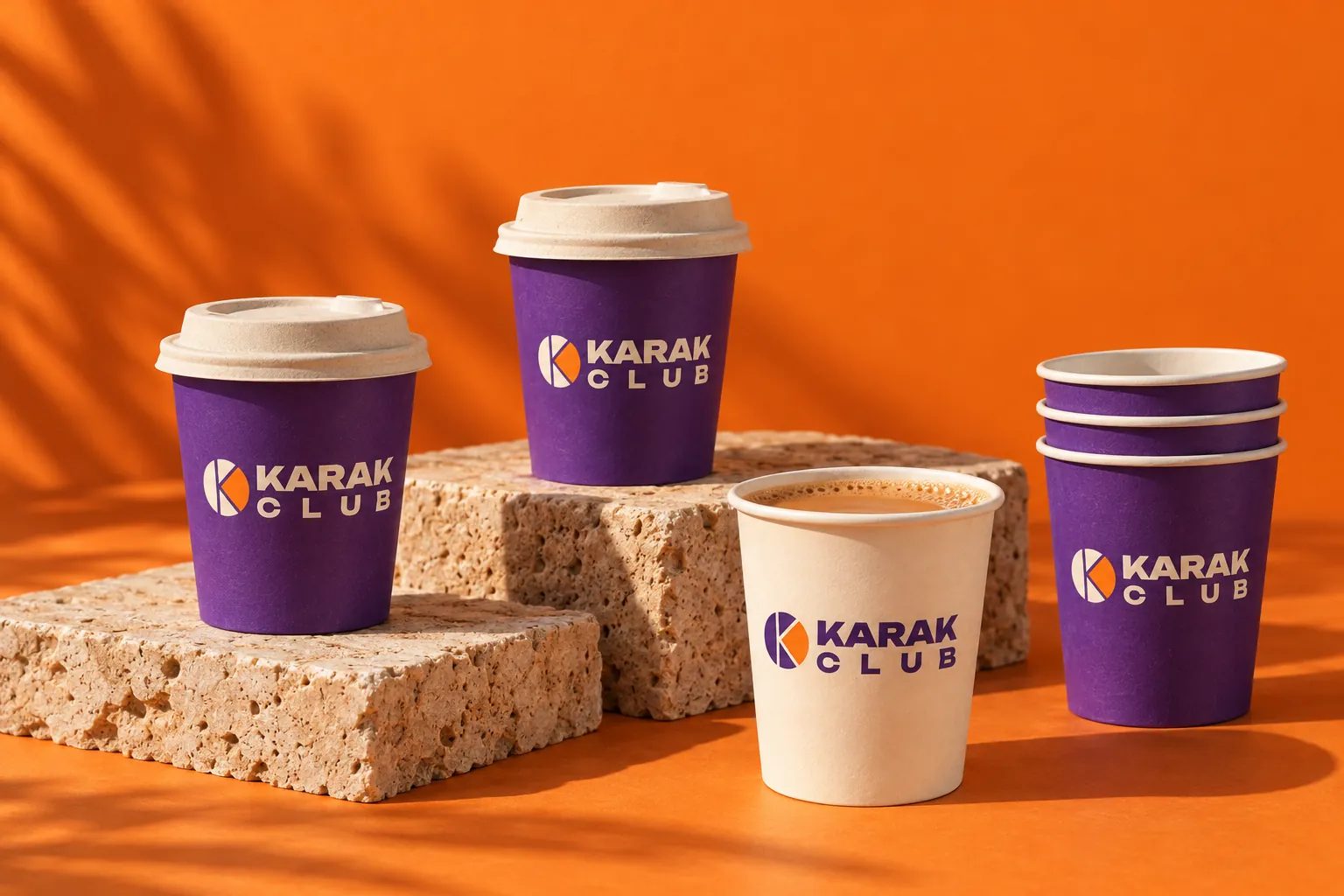
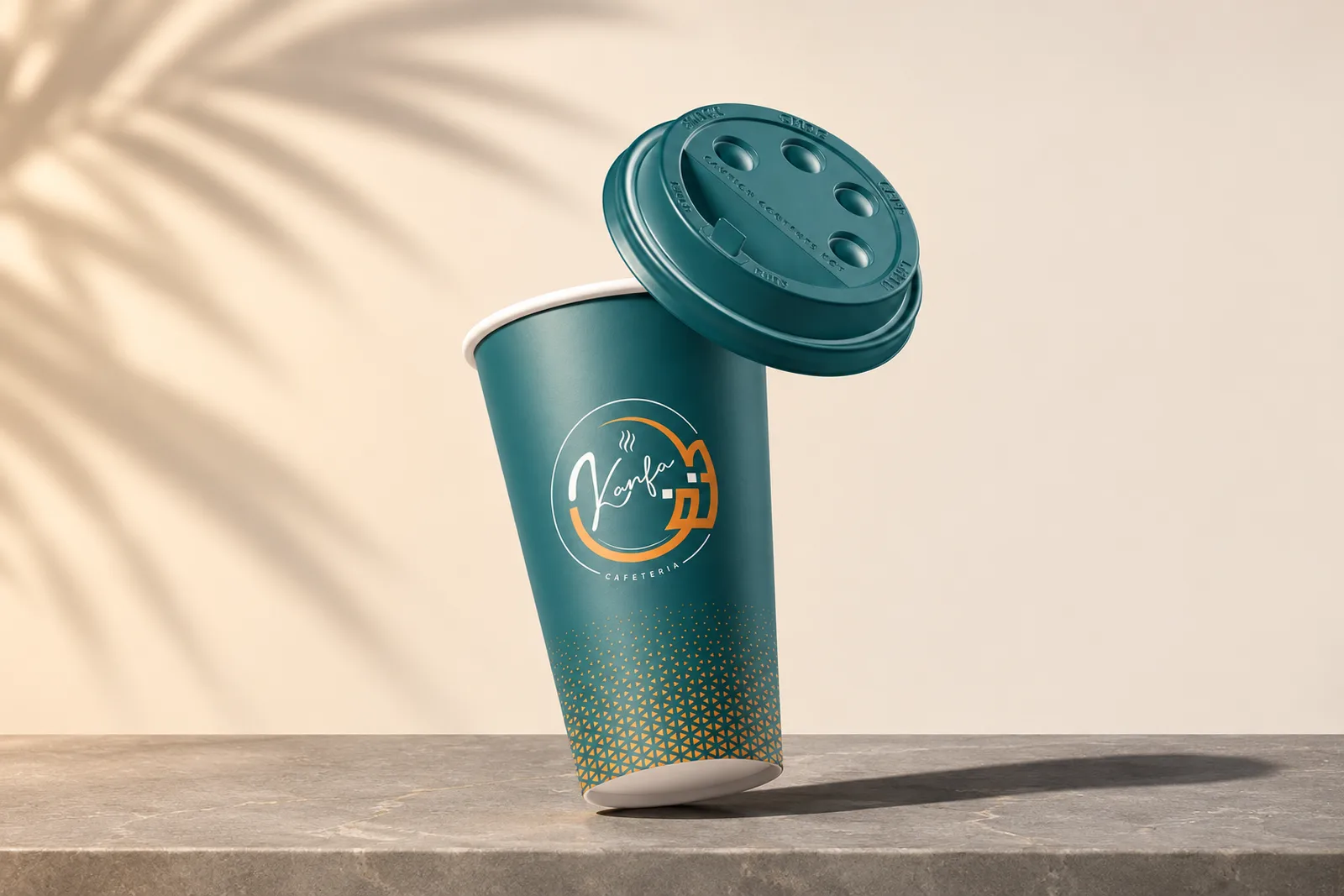
| Plastic hot cup | Single-wall or double-wall paper cup | Paper cups are not on the banned list. See our post on whether paper cups are banned for the lining question |
| Plastic cold cup (PET/PP) | Double-coated paper cold cup, or PLA cup | Paper cold cups need a barrier on both sides to handle condensation |
| Plastic dome or sip lid | Molded fiber lid, paper lid, or plant-based (PLA/CPLA) lid | Fit is the hard part. Match the lid to the cup rim diameter, not the oz size |
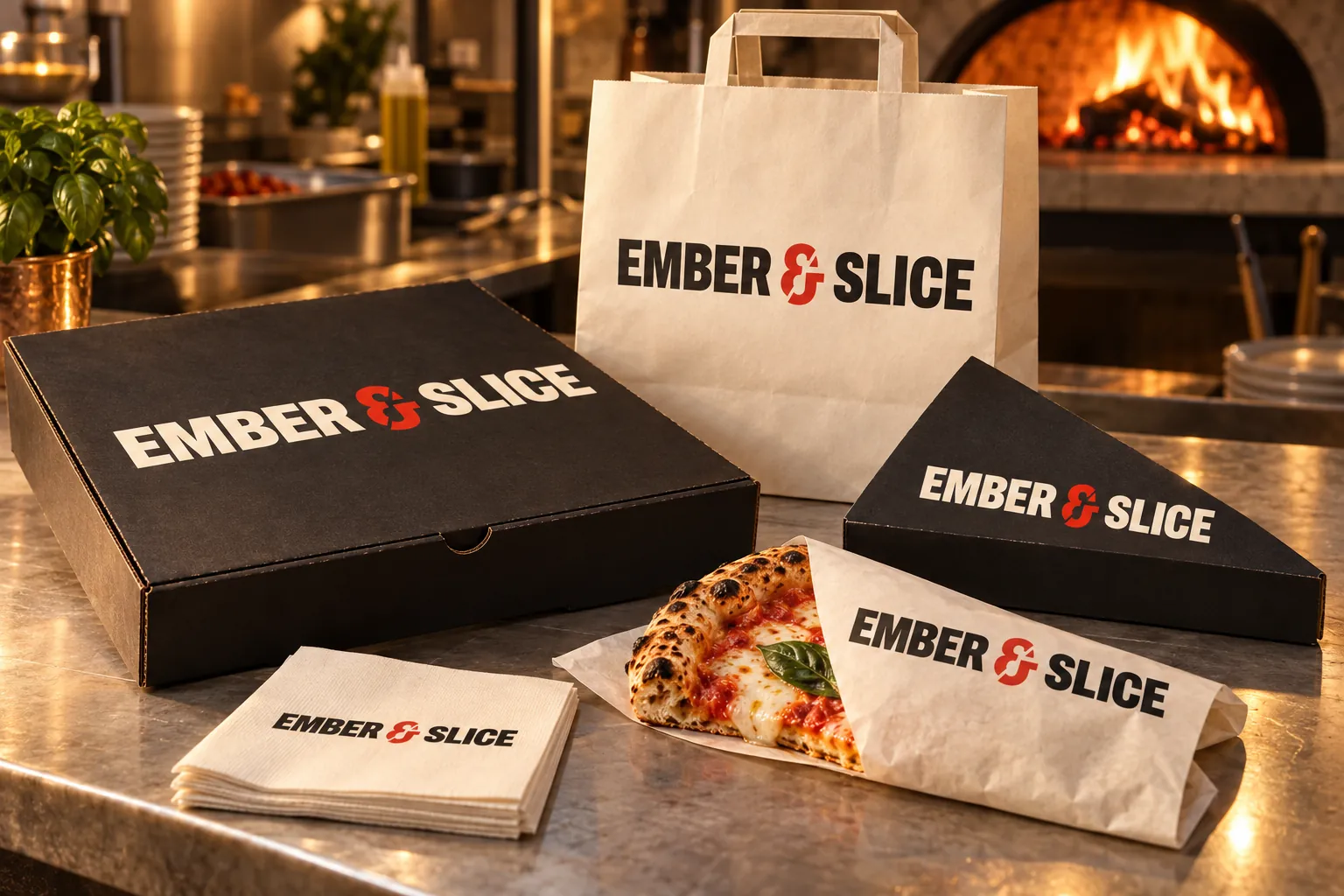
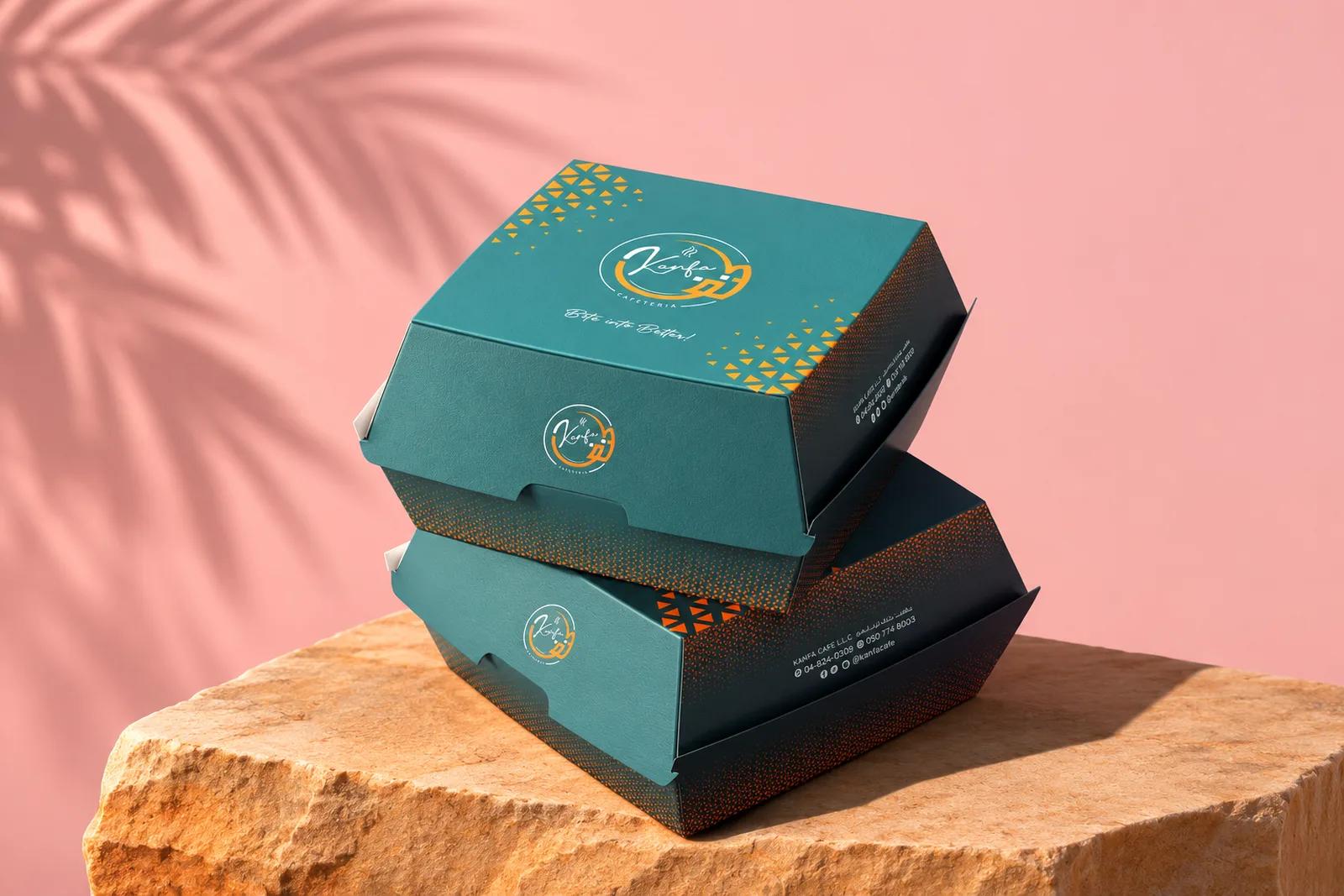
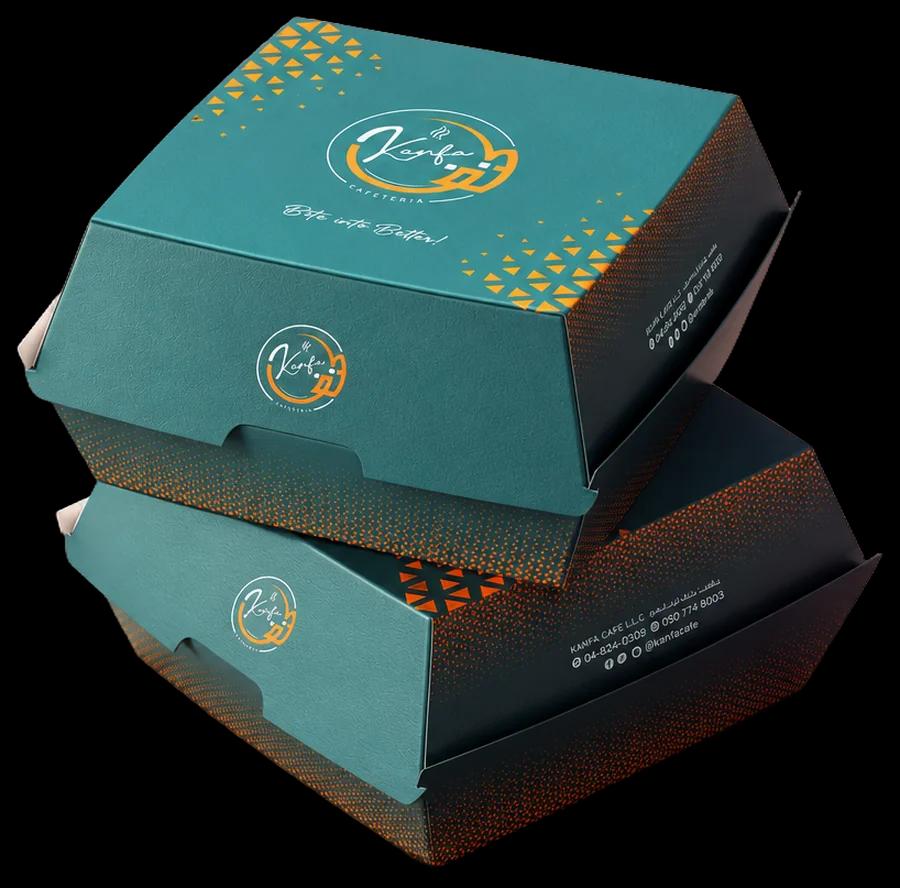
| Styrofoam clamshell | Kraft burger box, paperboard meal box, or bagasse clamshell | Grease-resistant board or a greaseproof liner stops oil marking the print |
| Styrofoam soup cup | Double-wall paper soup container or kraft bowl with paper lid | Specify a tight lid fit for delivery |
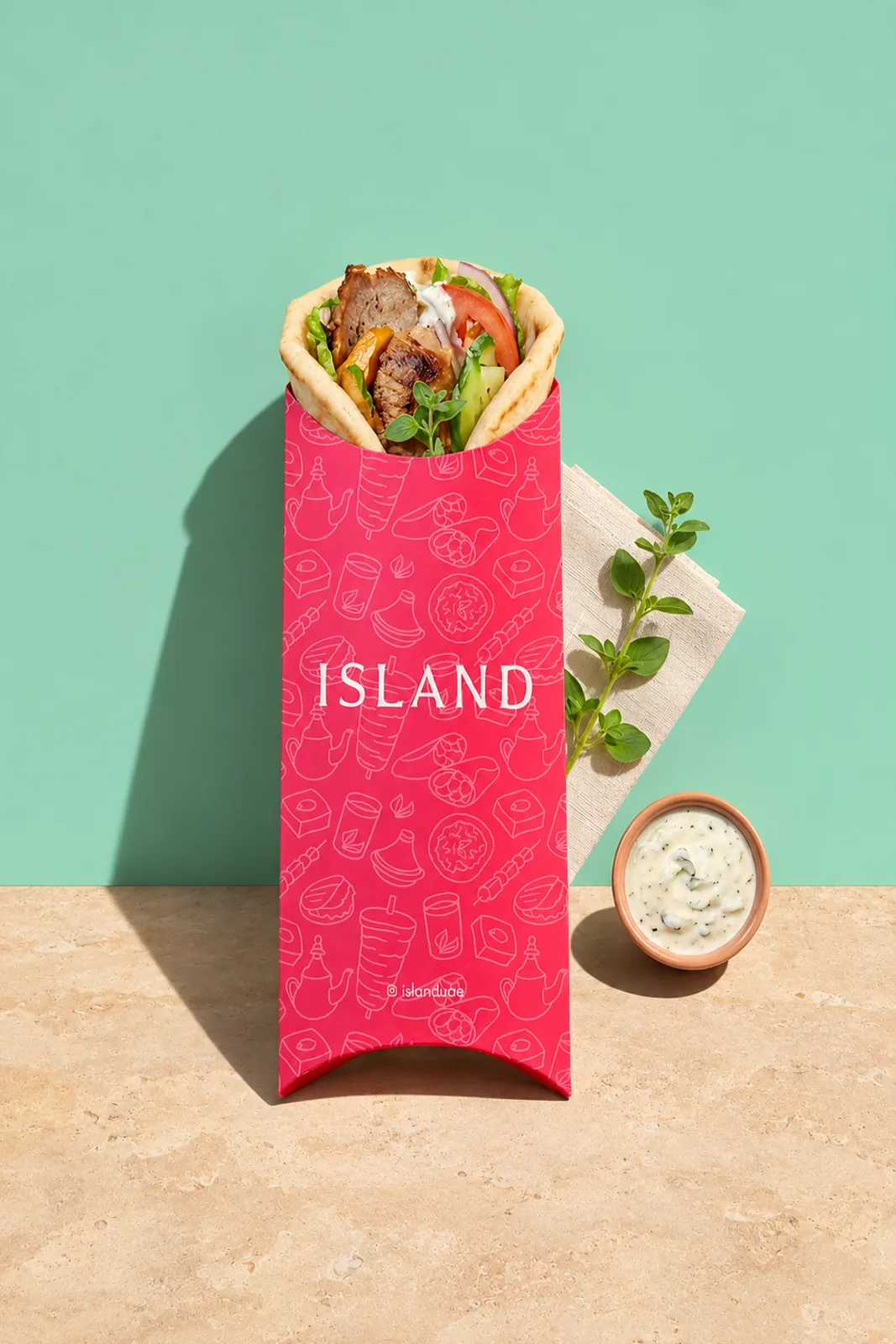
| Plastic cutlery | Wooden or paper-based cutlery | Wrap cutlery in a printed paper sleeve with the napkin |
| Plastic straw | Paper straw | Paper straws for thick shakes need a wider bore |
| Plastic stirrer | Wooden stirrer | Most suppliers stock birch stirrers in 140 mm and 190 mm |
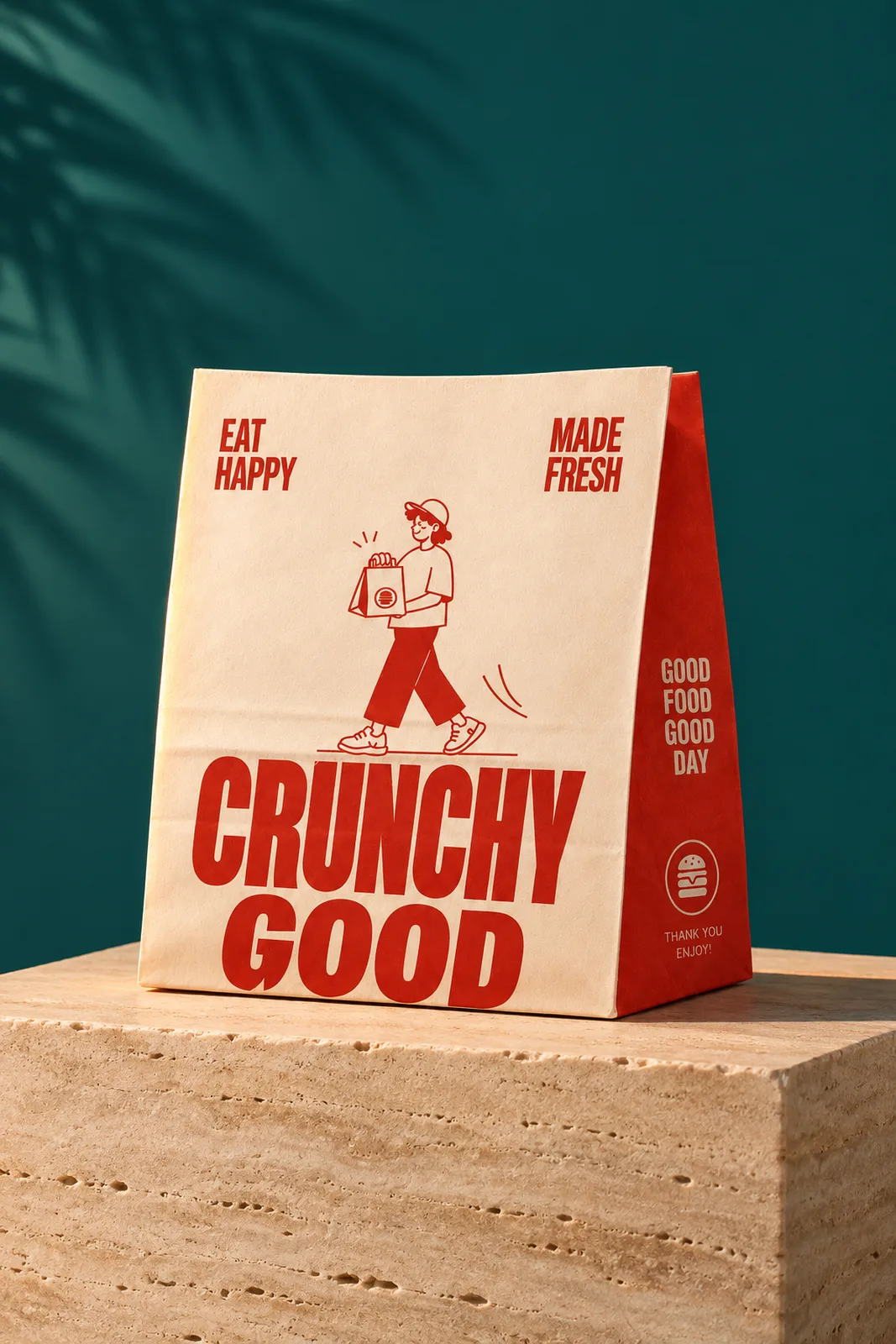
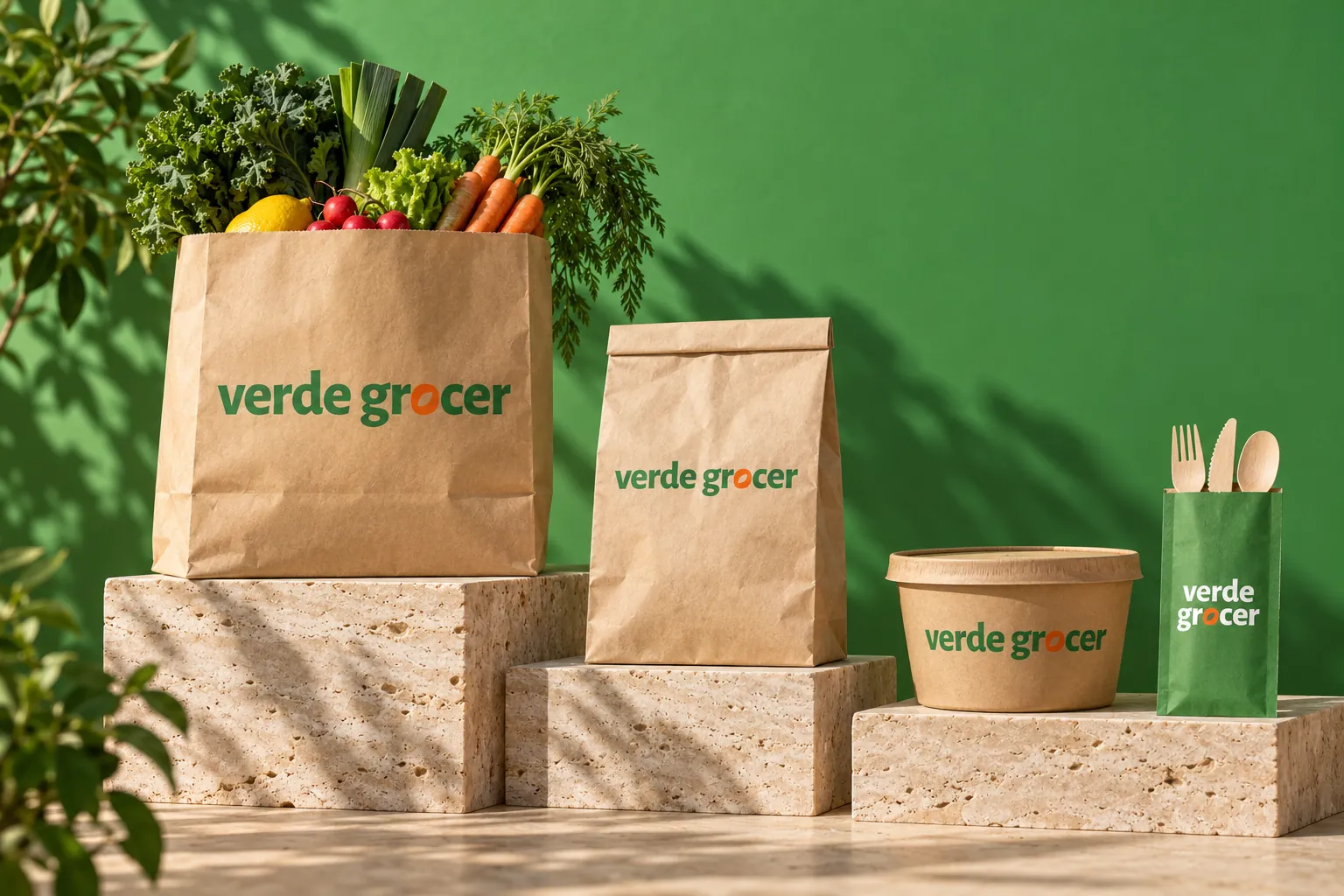
| Thin single-use carrier bag | Kraft paper bag above 57 microns, with handles | 80 to 120 gsm kraft is typical for takeaway carriers |
| Plastic table cover (Dubai) | Printed paper placemat or table roll | Placemats double as a menu or promotion space |

What this means for a café, a bakery and a cloud kitchen
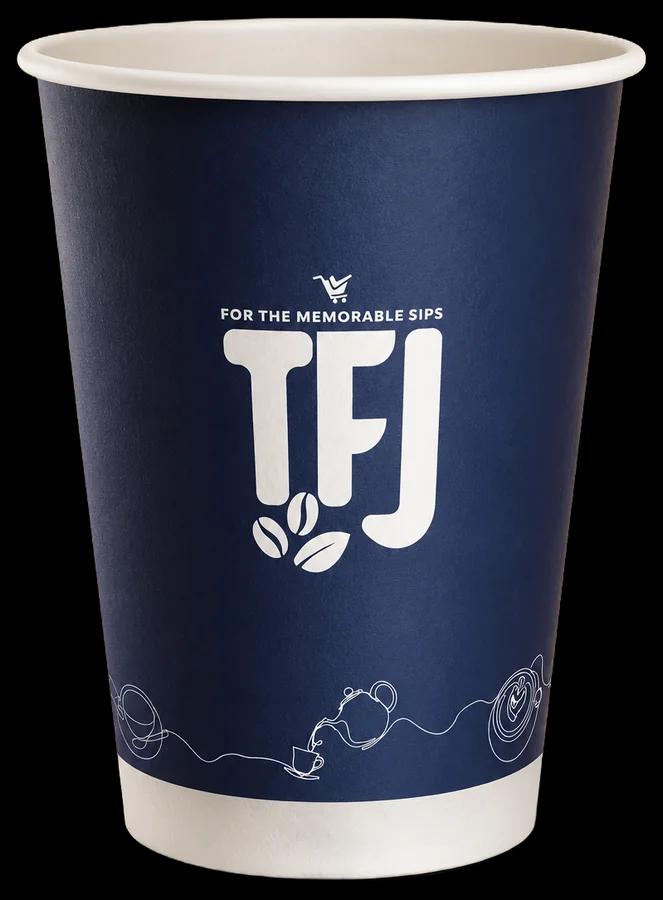
A specialty café usually has the shortest list of changes and the most visible ones. Cups were already paper. The work was in lids, stirrers and straws, and in cold drinks, where many cafés used clear PET cups for iced lattes. Moving cold drinks to paper means accepting an opaque cup, which turns the cup into print space. Several of our café clients now run a separate cold-cup design for summer.
A bakery's exposure sits in bags and boxes. Window cake boxes with a plastic film window are not a single-use plastic item on the published lists, but a growing number of bakeries are asking us for windowless designs or plant-based film anyway, because their customers ask. Thin bags for bread, croissants and cookies are where to check thickness and exemptions carefully.
A cloud kitchen has the longest list because it packs everything for travel: containers, lids, cutlery, sauce pots, carry bags and tamper seals. The styrofoam ban removed the cheapest insulated option, so kitchens moved to kraft boxes, paperboard meal trays and bagasse. Delivery adds a further test the rules do not mention: the pack has to survive a 25-minute ride on a motorbike in August. Specify grease resistance, lid fit and stacking strength, and run a test order before switching your whole menu.
A compliance checklist you can run this week
List every single-use item that leaves your premises
Walk the counter and the delivery pass. Include sauce pots, cutlery packs, straws, carry bags, cake boards and table covers. Most kitchens find 15 to 30 line items.
Mark each item by material and thickness
Ask suppliers for spec sheets that state the material, the coating or lining, and for bags the caliper in microns. Do not rely on a carton label that just says eco or green.
Check each item against the rule in every emirate you sell into
A Sharjah kitchen delivering into Dubai needs to meet Dubai's rules for those orders. Use the timeline table above as a starting point, then confirm with MOCCAE or the municipality.
Choose swaps and test them under real conditions
Order samples, fill them with your hottest and oiliest menu items, and send a test delivery. Check lid fit, leaks, grease marks and how the print looks on arrival.
Plan stock and reorder dates
Printed paper packaging takes longer to produce than plain stock. Build reorder points around your supplier's lead time so you never run short and fall back on a non-compliant item.
Keep a file
Store spec sheets, supplier declarations and invoices for each compliant item. If an inspector asks, you can show what you buy and why it meets the rule.
Labels and claims: say less, prove more
The ban pushed a lot of packaging marked biodegradable, compostable or eco-friendly onto the market. Some of it is accurate, and some is not. The federal phase 1 rule specifically included degradable plastic bags in the ban, which tells you how regulators view plastic that merely breaks into smaller pieces.
If you print a claim on your packaging, you should be able to back it up with a test report or a supplier declaration for that exact material. Paper-based packaging can usually say what it is made of without exaggeration: paperboard, kraft paper, a named coating. That is more useful to a customer than a green leaf icon, and it is safer for you. Our guide to biodegradable, compostable and recyclable packaging explains the differences between these terms in detail.
Common mistakes we see
The first is switching cups and forgetting lids. A paper cup with a plastic lid still puts a banned item in the customer's hand. The second is ordering bags by gsm alone without checking caliper, especially for light bakery and sandwich bags. The third is assuming that because a supplier sells it, it must be compliant. Distributors still clear old stock, and the rules apply to the seller as well as the importer.
The fourth is treating compliance as a purchasing task only. When your cups, bags and boxes change, your brand changes with them. A plain white paper cup in place of a printed plastic one is a missed opportunity. Paper takes ink well, and a printed cup or bag is often the only piece of your brand that leaves the shop with the customer.
Where GPP fits
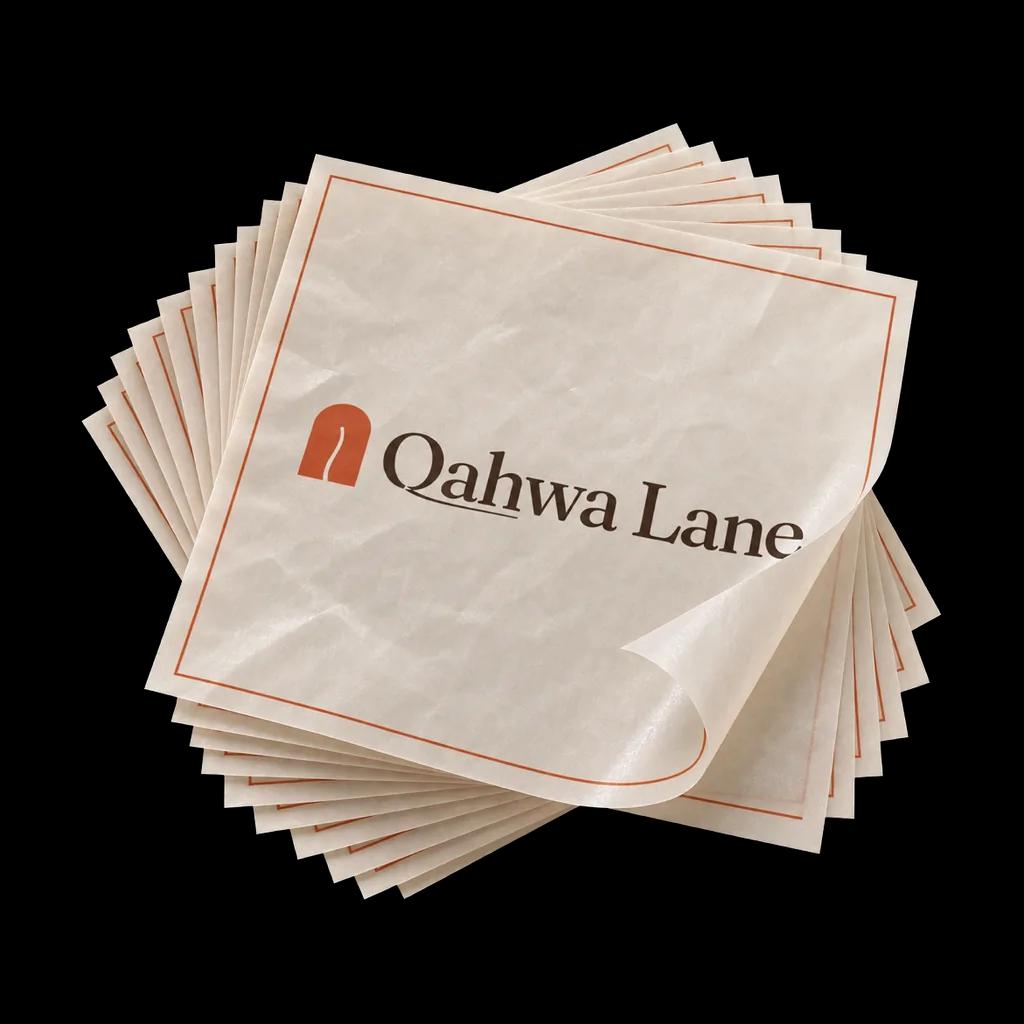
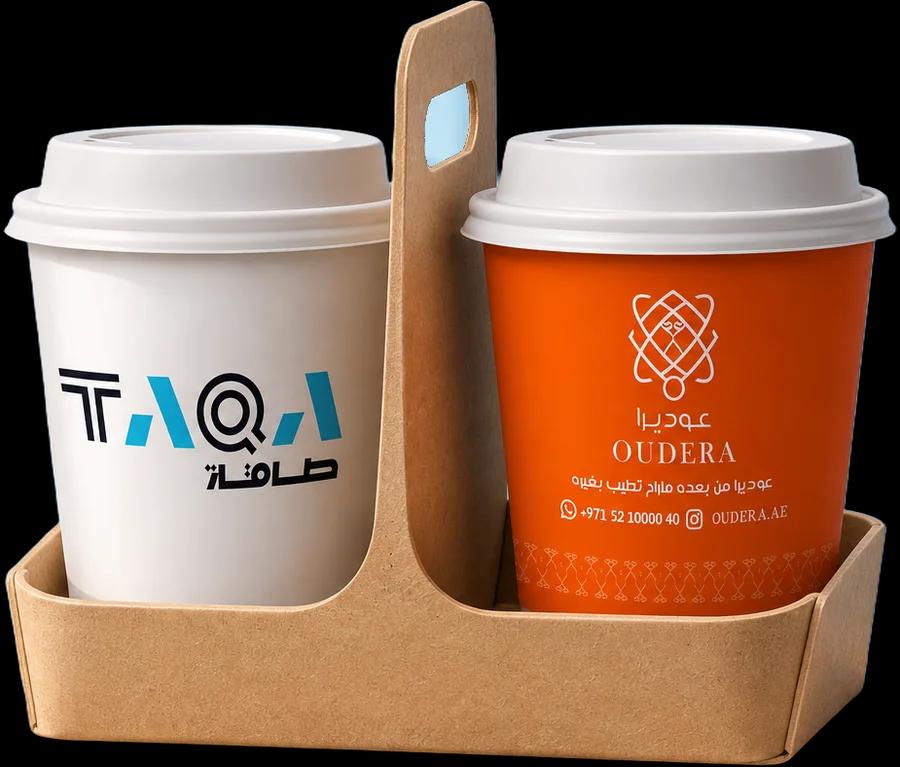
German Printing Press has printed in the UAE since 2009, on German-built Heidelberg offset presses, from its factory in Ajman. We print and convert paper cups, kraft and shopping bags, food boxes, cake and pizza boxes, greaseproof wraps, cup carriers and napkins: the paper side of the swap table above. If you are working through a switch, send us your current item list and we will tell you which items we can make, what samples to test first and what information we need to quote.
We are a manufacturer, not a regulator. For a ruling on a specific product, ask MOCCAE or your municipality, and keep their answer with your records.
Products in this guide
GPP Production Team
Print & packaging specialists, Ajman
Written by the people who run our presses and finishing lines in Ajman, and checked against current UAE rules where regulation is involved. Published 1 Sept 2026; last reviewed 10 Oct 2026.